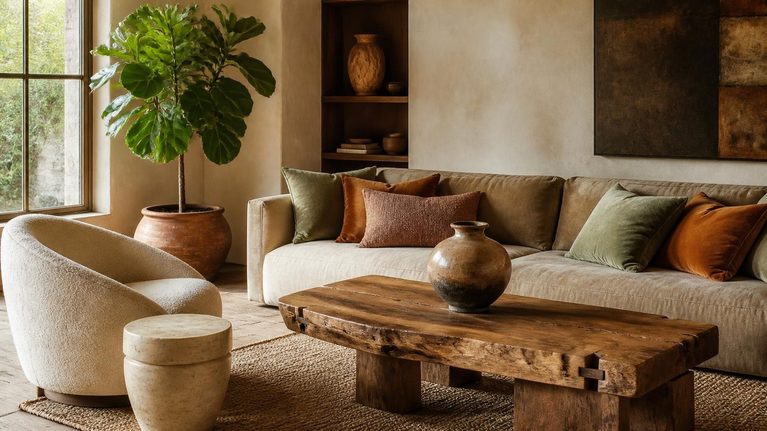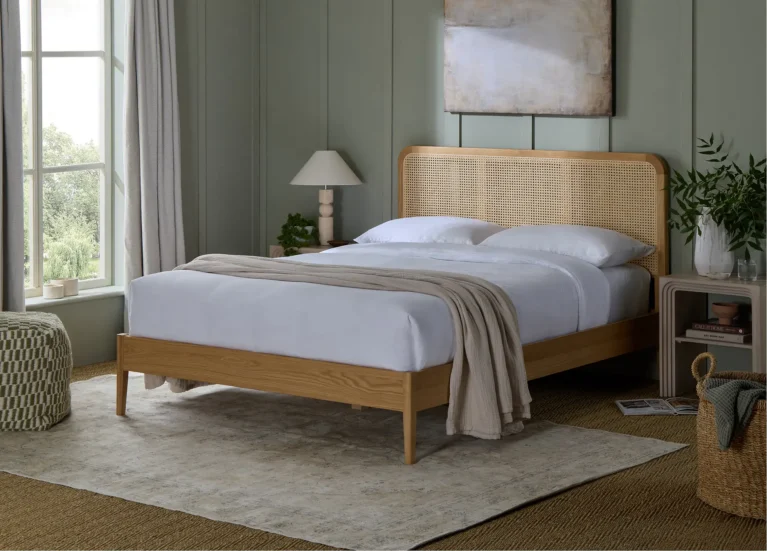

The living room is where most of us spend our evenings, which is exactly why it is the room I am slowest to furnish. A sustainable living room is not about buying everything at once with an eco label on it. It is about choosing a handful of well-made pieces that will last, then letting the room build up over time.
For my first ever living room we found our sofa on Facebook Marketplace, which was a great way to recycle and repurpose unwanted items to save them from going to the skip. For a big investment sofa for a family home that will last you hopefully a lifetime, it’s worth saving up and living with the area first for a bit to see what kind of shape or how many seats you would like.
I worked with many clients who would come to us to upholster their family sofas that had already lasted them 10 to 15+ years. When you invest in a good quality frame this sofa can last a whole lifetime, and if the fabric gets old or tired, you can upholster the sofa or refill cushions to something bespoke to you, which is the most sustainable and often, cheapest option rather than buying new again. That’s why it’s so important to invest in a good quality sofa the first time, as it ends up being cheaper in the long term. A cheap frame would not be worth spending money on upholstering as the frame would break in a matter of years. Read my guide below to help you make the right investment choices.
Start with how you use the room
Before buying anything, I write down what the room needs to do: where people sit, where things are stored, where the light falls. It stops impulse buys and makes it easier to spend on the pieces that matter.
- Seating first. The sofa and a good chair are used every day, so they deserve most of the budget.
- Surfaces next. A coffee table and a side table or two.
- Storage. A sideboard, bookcase or media unit, sized for what you actually own.
- Textiles and lighting last. Cushions, throws, rugs and lamps are the easiest things to change with the seasons.
What to look for in any living room piece
- Solid materials. Solid or reclaimed wood, metal and stone can be repaired and refinished. Chipboard and thin veneers usually cannot.
- Clear sourcing. FSC certification on timber, or a retailer who can tell you where materials come from. If it’s not in the product description, ask.
- Natural fibres. Wool, linen and cotton age well and are easier to live with than many synthetics. However, synthetics do fade less in strong sunlight, so choosing recycled synthetic fabrics (recycled polyester) helps extend the colour longevity of an item if you have it in front of a sunny window.
- Repairability. Removable sofa or cushion covers, replaceable cushions and oiled wood finishes keep furniture in use for longer.
- Low-VOC finishes. Paints, glues and lacquers can release VOCs into the air at home, especially when they are first introduced. My guide to non-toxic furniture explains what to ask and what to finish or repair your furniture with if you need to.
Two pieces from my edit that tick these boxes:

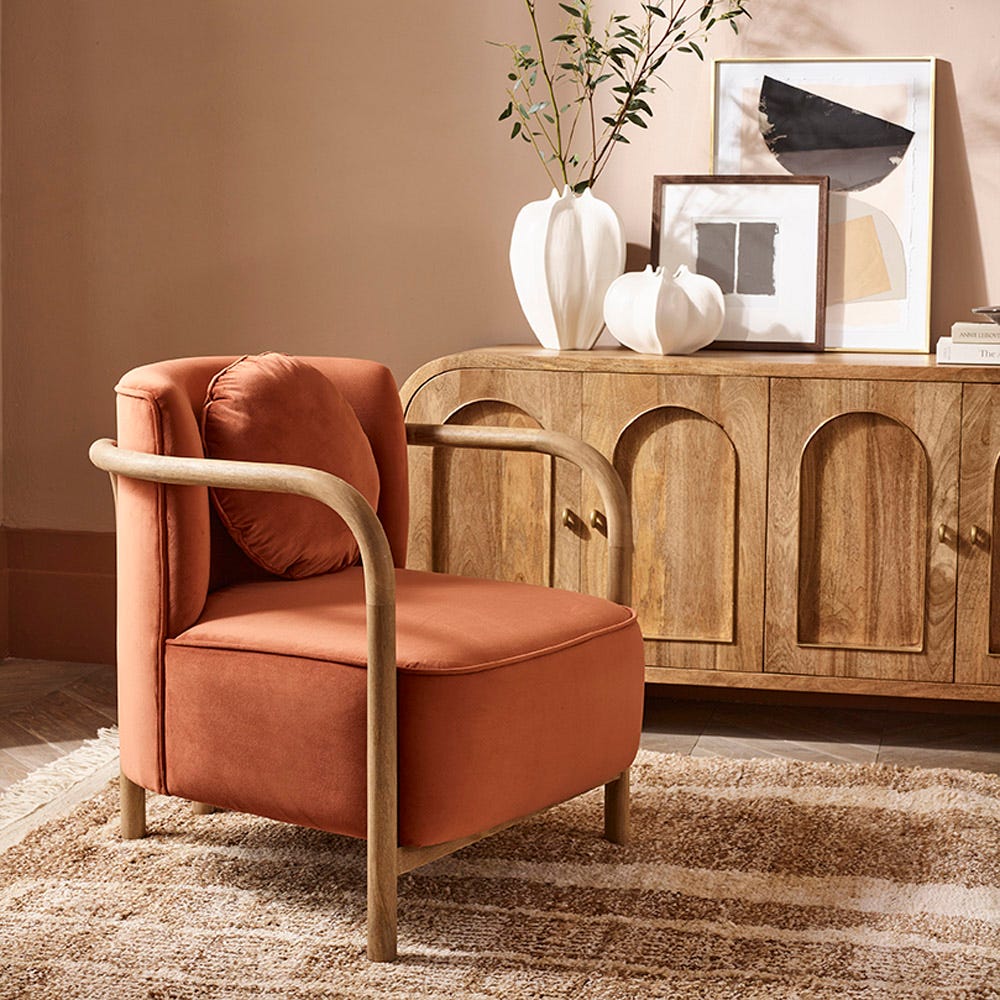
Calvin Armchair In Brown Striped Woven Rug
Handcrafted from solid oak and upholstered in woven linen: the kind of frame worth reupholstering one day.
£699.00

Nisha Reclaimed Wood & Iron Coffee Table, Natural
An aged reclaimed wood top with a chunky iron base, materials that wear in rather than wear out.
£650.00
Measure twice
Measure the room, then the route in: front door, hallway and stairs. Always remember to measure the width of your doorway and any turns the large furniture item will go through to get it into your living room! If unsure, always ask the brand about clearance measurements. I mark the footprint of large pieces on the floor with masking tape and live with it for a few days. Check delivery and returns terms before ordering, as large furniture can be costly to send back.
Buying your living room furniture online
Buying furniture online can feel like a leap when it is something as big as a sofa. The reassuring part is that most of what decides whether a piece will work in your room can be checked from home, tape measure in hand. Furniture in Fashion’s 2026 buying guide makes the same point: size and fit are answered just as well online through product specs as in a showroom, and arguably better, because you can measure your own room there and then rather than a big shop floor.
What you can check from home
- Size and fit. Everything from width and depth to seat height is in the listing, and you can test it against your own room with the masking tape trick above.
- Storage. For sideboards and cabinets, look for the internal measurements, not just the external ones. That is where the surprises hide.
- Materials and construction. Solid wood or engineered board, the fabric composition, the finish. A good product description can help you understand how durable the materials are, and you can do your own research into it rather than being strongly influenced by a salesman.
Comfort, colour and texture: the three to take care over
- Comfort. Check the seat depth and seat height, then measure a sofa or chair you already find comfortable and compare. If you are shorter, a shallower seat usually supports your back better. If you love to sink in, go deeper.
- Colour. Screens and shop lighting both change how colours look, and British daylight is cooler than either. If a brand offers fabric swatches or wood samples, order them and look at them in your own room in daylight.
- Texture. Read the fabric composition (linen, wool, recycled cotton) and zoom in on the close-up photos. Natural fibres often look and feel better in real life than on screen.
Natural fibres in my edit, if you love the look of linen:

Kashi Linen Armchair, Natural
Natural linen upholstery on a solid mango wood base with carved feet.
£1450.00

Abe Deconstructed Linen Armchair, Natural
A relaxed, deconstructed linen armchair with a soft charcoal stripe.
£1250.00
Before you press buy
- Check what delivery includes: to your door or into the room of your choice, and whether packaging is taken away.
- Check the returns window and who pays for collection on large items, as this varies from brand to brand.
- Renting, or planning a move? Modular sofas and pieces that dismantle are much easier to take with you, and easier to get through narrow doorways in older homes.
Modular sofas in my edit, worth a look if you rent or have narrow doorways:

Krissa Modular Sofa, Natural, 75 x 170 x 170 cm
The corner piece of the Krissa collection, with a solid mango wood frame. You add as many modules as you need, so it arrives in pieces and can be rearranged when you move.
£1200.00

Modular 2-seater sofa in Khaki Wool
A modular two seater in wool, easy to add to later or take apart for a move.
£2666.00
Every piece in my shop takes you through to the brand’s own website, so you can check dimensions, delivery and returns before you commit.
Understanding sustainability claims
Words like “eco” and “natural” have no fixed meaning or guarantee on sustainability. Look for specifics instead: what the frame is made from, which certifications apply, where it was made and what the warranty is. Decide what “sustainable” means to you and make your choice depending on how the product meets that. My guide to understanding sustainable furniture claims goes into this in detail.
Second-hand and vintage
Buying second-hand is often the lowest-impact option, and solid older furniture is usually easy to refinish or upholster. My guide to reclaimed wood furniture covers what to check.
If you cannot find the right piece second-hand, reclaimed wood is the next best thing:

Ibo Reclaimed Wood Coffee Table, Natural
A coffee table made from reclaimed wood, full of the character that only older timber has.
£650.00

Sita Reclaimed Wood & Iron Coffee Table, Chocolate Brown
Reclaimed wood and iron, combining craftsmanship with materials given a second life.
£750.00
Common questions
Where should I spend the most?
On the pieces you use every day, usually the sofa and a comfortable chair.
How do I make a small living room feel calm?
Fewer, larger pieces rather than lots of small ones, a rug that anchors the seating, and storage that hides all the clutter.
Is it worth paying more for solid wood?
For pieces you want to keep for years, usually yes, because solid wood can be repaired and refinished.
Shop my edit
Browse my edit of sustainable living room furniture, including sofas, armchairs and coffee tables.