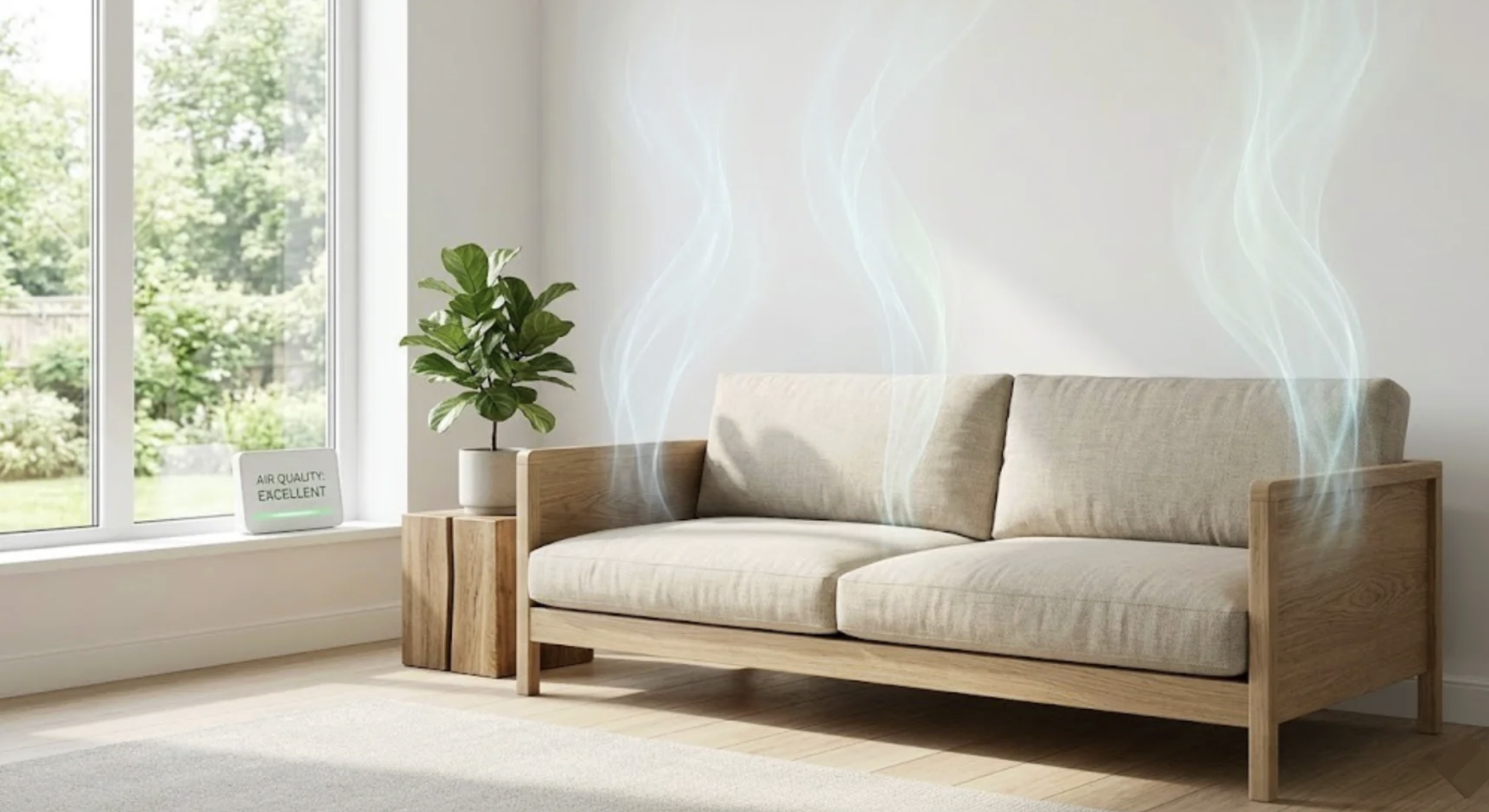

Have you ever walked into a room with a brand-new sofa or a freshly unboxed wardrobe and noticed that sharp, distinct “new furniture smell”? While we often associate that scent with “freshness,” it is actually the result of chemicals escaping into your living space, a process known as off-gassing. Startlingly, the air inside our homes can be two to five times more polluted than the air outside. So if you’re sometimes sensitive to chemicals like me, have children, or people living in your home with asthma, this ‘fresh’ smell can be affecting you more than you might think, and that’s why it’s important to choose non-toxic furniture for your home.
In this guide, we’ll explore the science of Volatile Organic Compounds (VOCs), why certain materials are riskier than others, and how to use a professional framework to choose non-toxic furniture that is both beautiful and safe for your family.
Why Indoor Air Quality is a Health Priority
In the UK, we spend roughly 90% of our time indoors. Whether we are working, sleeping, or relaxing, the quality of that air is vital. Reports from DEFRA show that indoor air can be significantly more polluted than the air in busy cities like London or Manchester.
The main culprits of this “invisible” pollution include:
- Formaldehyde: A colourless gas used in resins and glues.
- Benzene & Toluene: Found in industrial finishes and synthetic fabrics.
- Flame Retardants: Often added to cheap foam cushions.
For the 5.4 million people in the UK living with asthma, these pollutants are more than just a nuisance, they are direct triggers for respiratory attacks.
The Chemistry of Your Decor
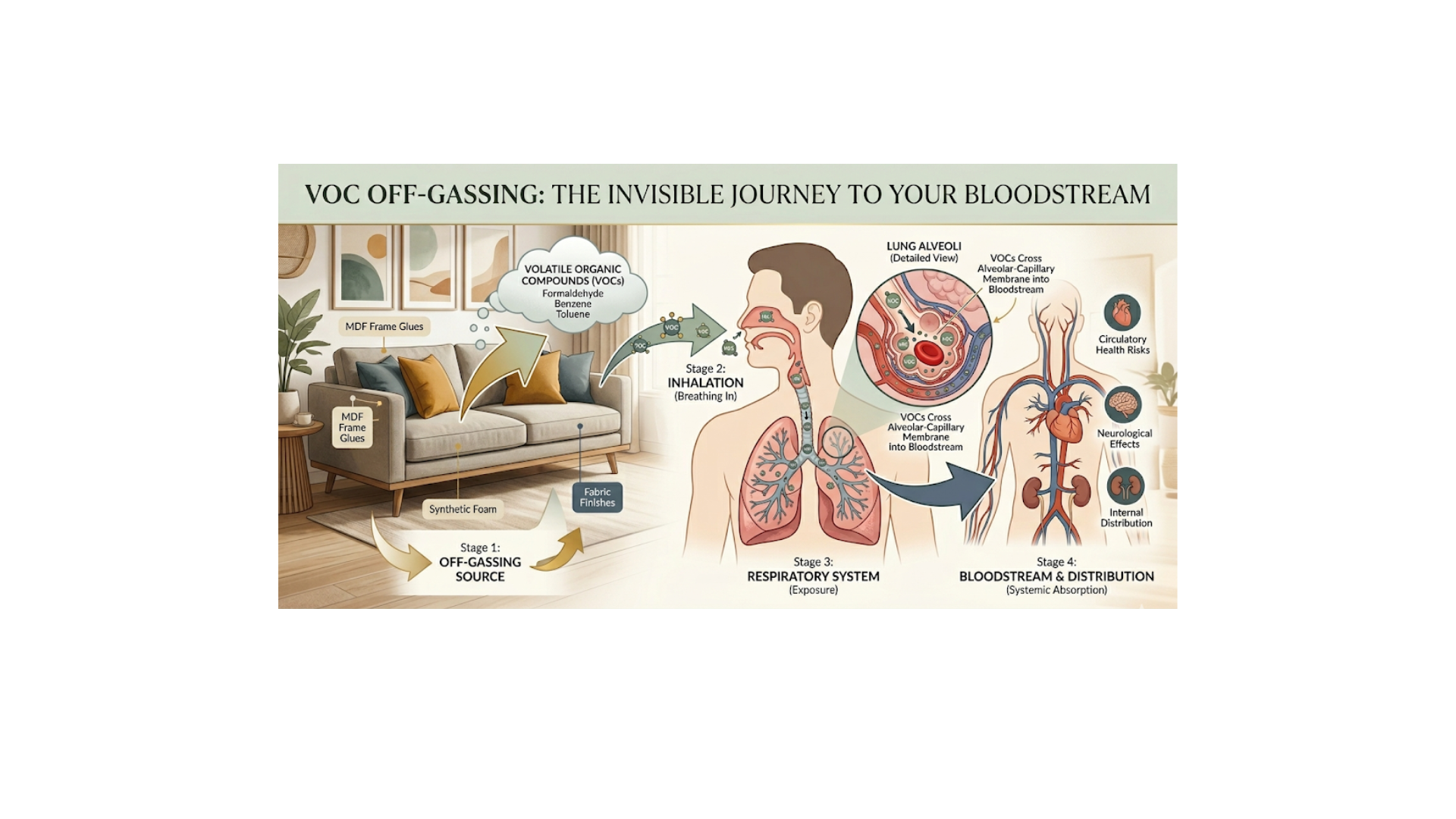
To improve your home’s air quality, you must understand the chemical composition of your furniture. VOCs aren’t just one substance; they are a category of chemicals with low boiling points, meaning they evaporate at room temperature.
How VOCs Affect the Body
- Inhalation Exposure: Gases enter the bloodstream via the lungs, leading to “respiratory irritation” (coughs and scratchy throats).
- Circulatory Health: The British Heart Foundation notes that long-term exposure to poor air quality can impact heart health.
- Carcinogenic Risks: Certain VOCs, like formaldehyde, are classified as carcinogens after years of high exposure.
The Trade-off: “Fast Furniture” vs. Sustainable Timber
When shopping for an eco-friendly home, the material choice is your biggest lever for health.
- The Problem with MDF: “Fast furniture” relies on Medium Density Fibreboard (MDF) held together by formaldehyde-based glues. These items can off-gas at high levels for up to six months.
- The E1 Standard: In the UK, always look for the “E1” or “BS EN 13986” label. This ensures the wood releases less than 0.1 ppm of formaldehyde.
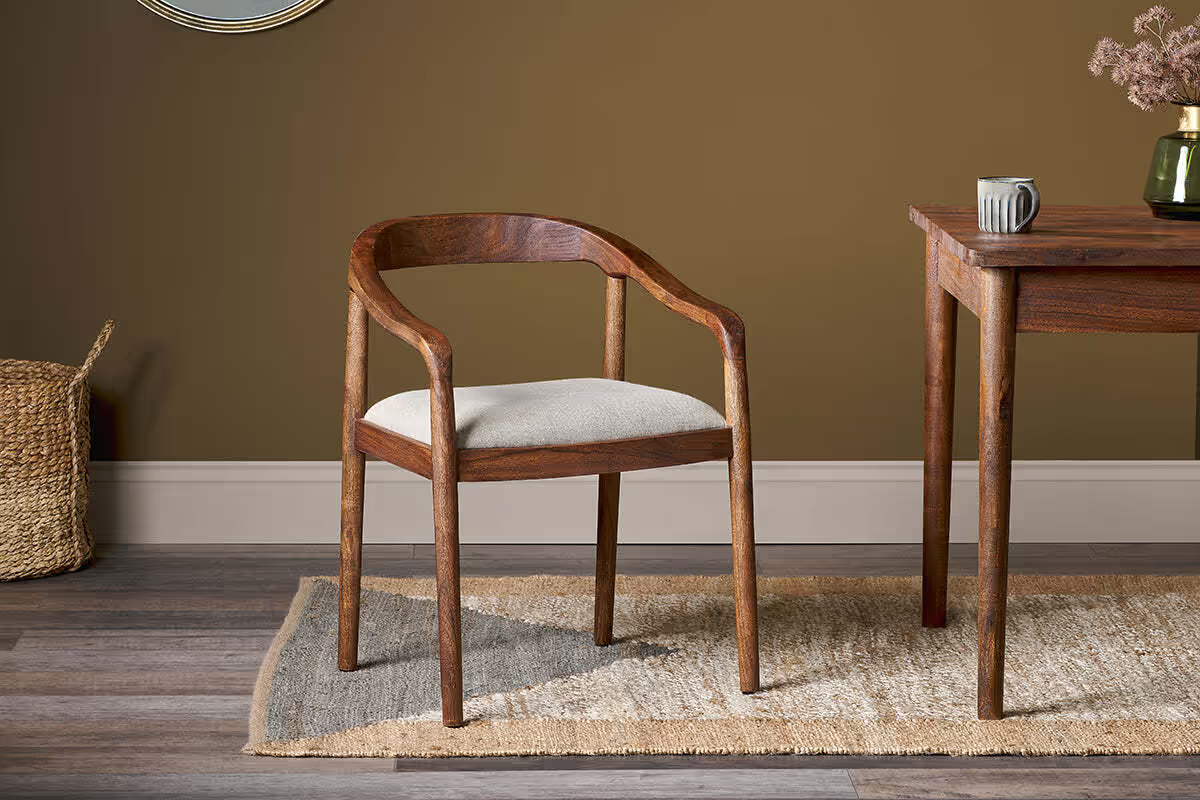
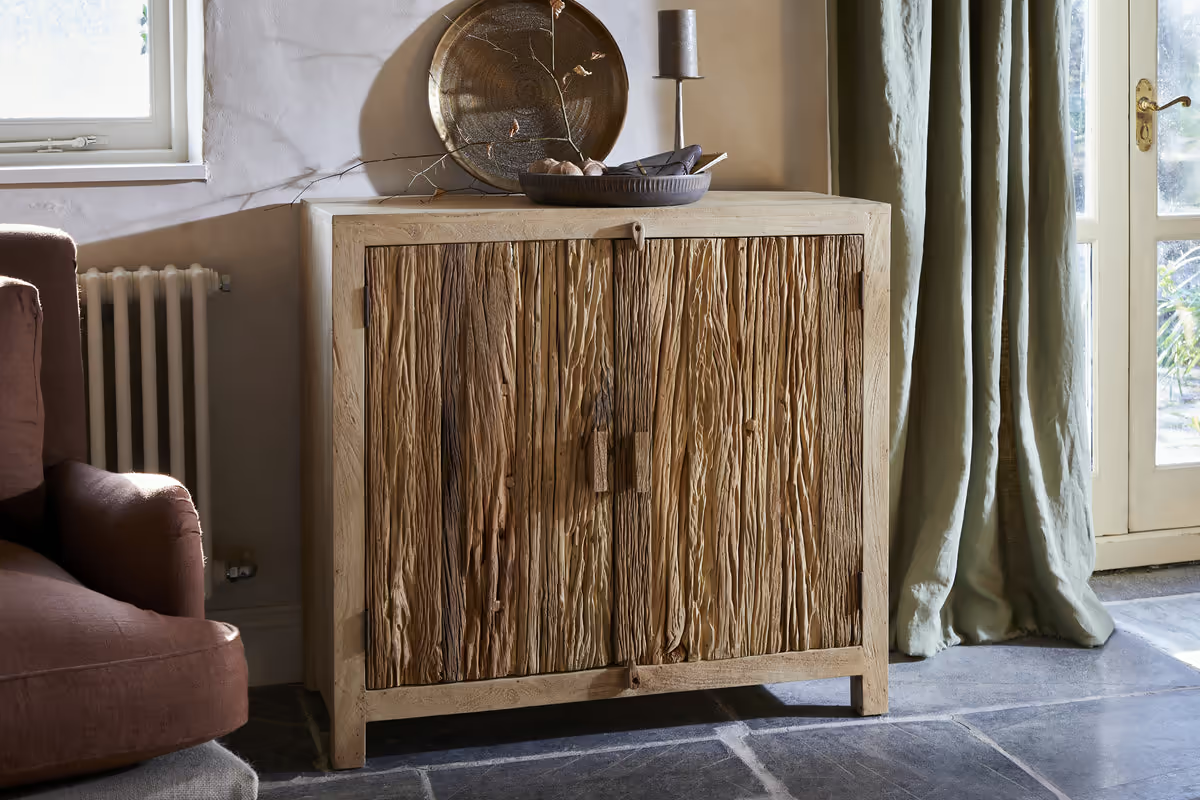
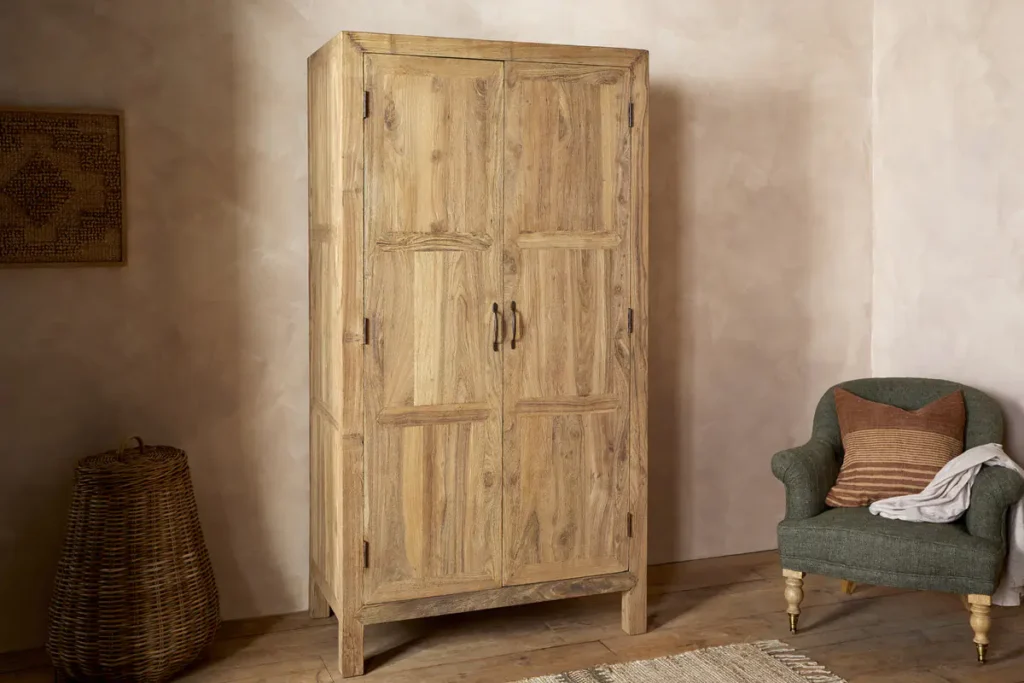
- The Solid Wood Advantage: Natural oak, pine, or walnut contains virtually no VOCs. While the upfront cost is higher, the “cost-per-year” is significantly lower as these pieces last for generations.
Decoding Third-Party Certifications
Don’t let “greenwashing” fool you. Look for these specific laboratory-tested labels:
- GREENGUARD Gold: The highest standard for air quality. Products are tested for over 10,000 chemicals in a “clean chamber“.
- CertiPUR®: Ensures the foam in your sofa or mattress is made without heavy metals, phthalates, or dangerous fire retardants.
- OEKO-TEX Standard 100: Guarantees that every thread and button on your upholstery is free from harmful toxins.
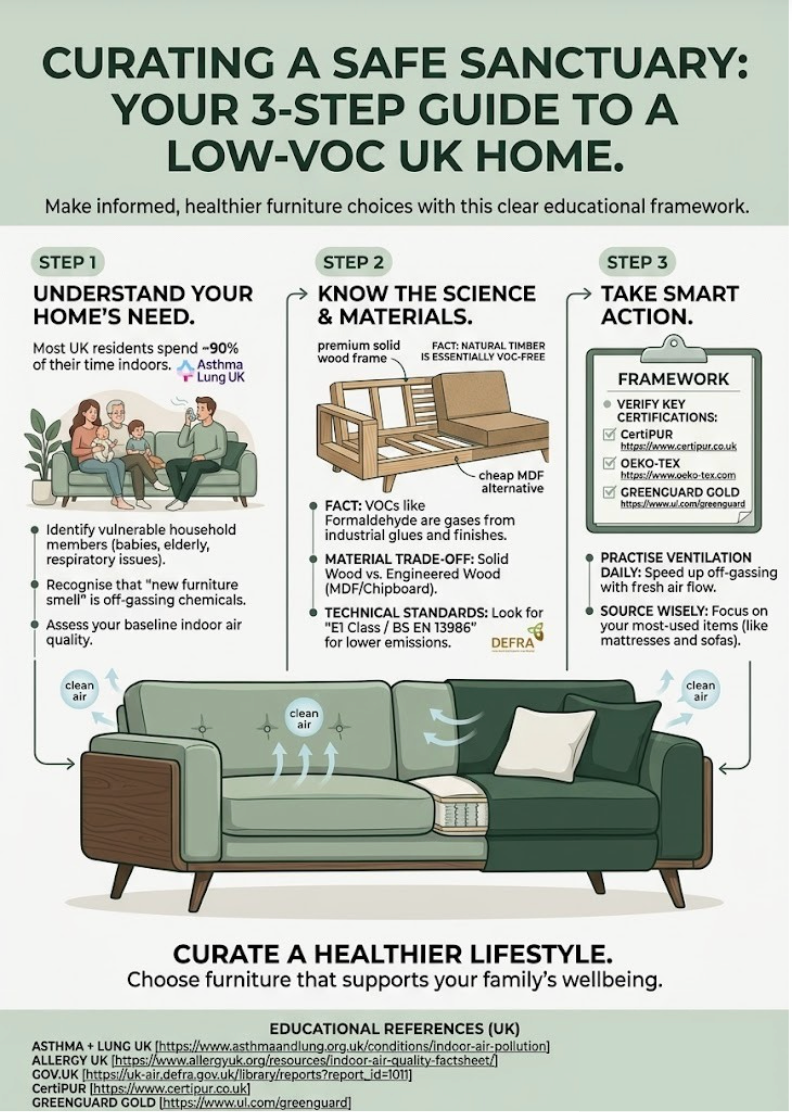
A 3-Step Plan for a Healthier Non-Toxic Furniture Sanctuary
- Step 1: Prioritise the “Big Breath” Items. Your mattress is the most critical. You spend a third of your life with your face pressed against it, so make sure it’s non-toxic.
- Step 2: Check the Finishes. Opt for water-based paints or natural oils (like beeswax). Look for the “VOC Globe” label on paint tins and aim for “Minimal” or “Low” content.
- Step 3: The “Bake-Out” Method. If you must buy MDF, unbox it in a garage for 72 hours. Once inside, turn up the heat during the day to force the gases out, then flush the room by opening all windows in the evening.
Conclusion: Designing for Life
Investing in low-VOC, sustainable furniture is more than an aesthetic choice; it is an investment in your long-term vitality. By choosing solid timber and certified non-toxic materials, you aren’t just decorating a room, you are ensuring your home remains a true sanctuary where the air is as clean and fresh as the design itself.
References
Asthma + Lung UK: Indoor Air Pollution Guide
DEFRA: Air Quality Expert Group Report (PDF)
British Heart Foundation: Air Pollution & Heart Health
HSE: Formaldehyde and Occupational Health (PDF)
HSE: Standards in Workspace Exposure Limits
UL Solutions: The Science of Greenguard
Now that you know how to protect your indoor air quality, head back to our guide on The Most Sustainable Materials for Home Furnishings to read about what materials you should look for when planning your sustainable home.