
There is a box in my flat that I get out every December, and the best things in it are the oldest with the most memories. That, for me, is the whole idea behind sustainable Christmas decorations: choosing pieces made from natural, lasting materials that you will be glad to unpack year after year, rather than buying a new theme every year.
I am not here to tell you to throw out what you already own. The most sustainable decoration is the one already sitting in your loft. But if you are filling gaps, replacing something broken or starting fresh in a new home, this is my edit of what is worth buying, what I would skip, and how to make it all last.
Christmas on the Cornish coast is filled with lots of outdoor walks, some very chilly sea dips and saunas, a bit of baking, and taking time to slow down with friends, family and loved ones. When the first week of December comes about, I love getting the Christmas decorations out, putting on some Christmas music and making mulled wine and obligatory mince pies whilst decorating the house. This is one of my favourite parts of the festive season. Christmas is the most wasteful season, so before you splurge on things you don’t need in Black Friday sales, take a minute to pause on what decorations you already have and if you can repurpose any. So whether you’re looking for new Christmas decorations this year, making your own, or using old ones, read my guide below to find out more about how you can make your Christmas that little bit more sustainable.
What makes a Christmas decoration sustainable?
When I look at decorations, I use the same lenses I use for furniture, just scaled down. The questions I ask are simple:
- What is it made from? Wood, jute, glass, metal and natural fibres are generally easier to live with long term than mixed plastics, glitter and flocking.
- Will it last? A decoration you use for ten Christmases is a very different thing from one that sheds or snaps by January.
- Can it be repaired, reused or passed on? A brass star can be polished. A wreath base can be redressed. A glitter-covered plastic bauble that’s shed it’s glitter rarely has a second life.
- What happens at the end? This is the one most of us never think about, and it is where a lot of festive decorations fall down.
I also try to be fair. Plenty of small makers do lovely, careful work but cannot afford formal certification, so a missing label is not automatically a red flag. Equally, a word like “eco” on a box is not proof of anything. I have written more about reading these claims in my guide to understanding sustainability claims.
The materials I look for (and the ones I skip)
Wood. Wooden beads, carved ornaments and simple wooden stars have a warmth that suits a calm, natural scheme. Look for solid wood rather than painted MDF where you can, and keep an eye out for FSC certification on larger pieces.
Jute and natural fibres. Jute brings a soft, rustic texture, and it is a plant fibre rather than a plastic. Think garland strings, woven trees and table runners.
Recycled glass. Glass baubles feel lovely and catch candlelight beautifully, and choosing recycled glass gives material a second use. The honest catch: glass baubles are not something you can put in your recycling bin when they break (more on that below), so buy pieces you will treat carefully and keep.
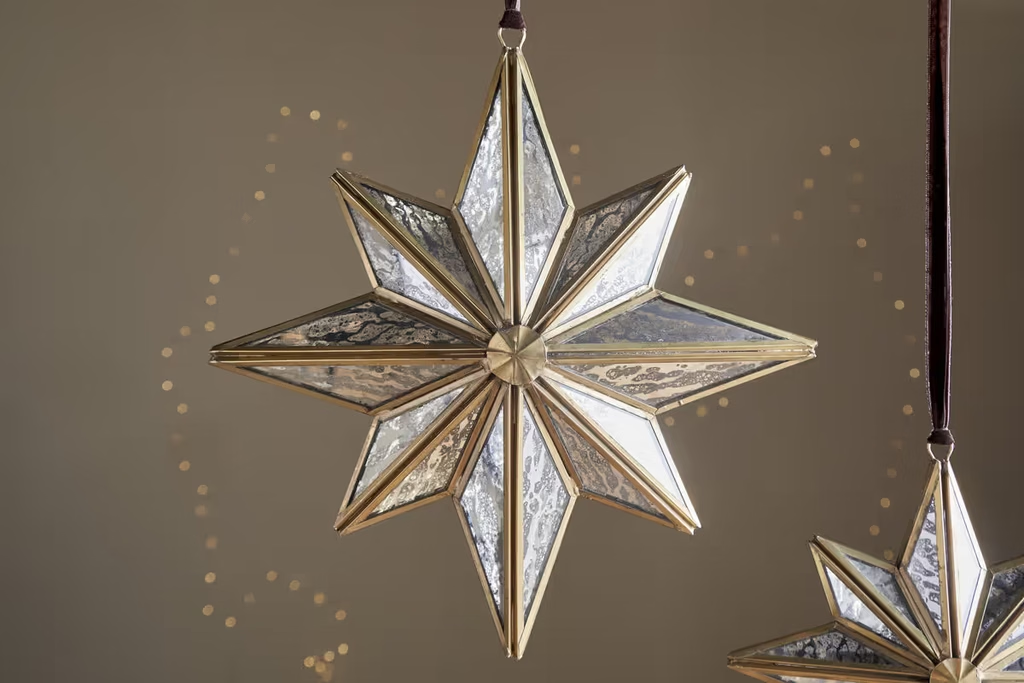
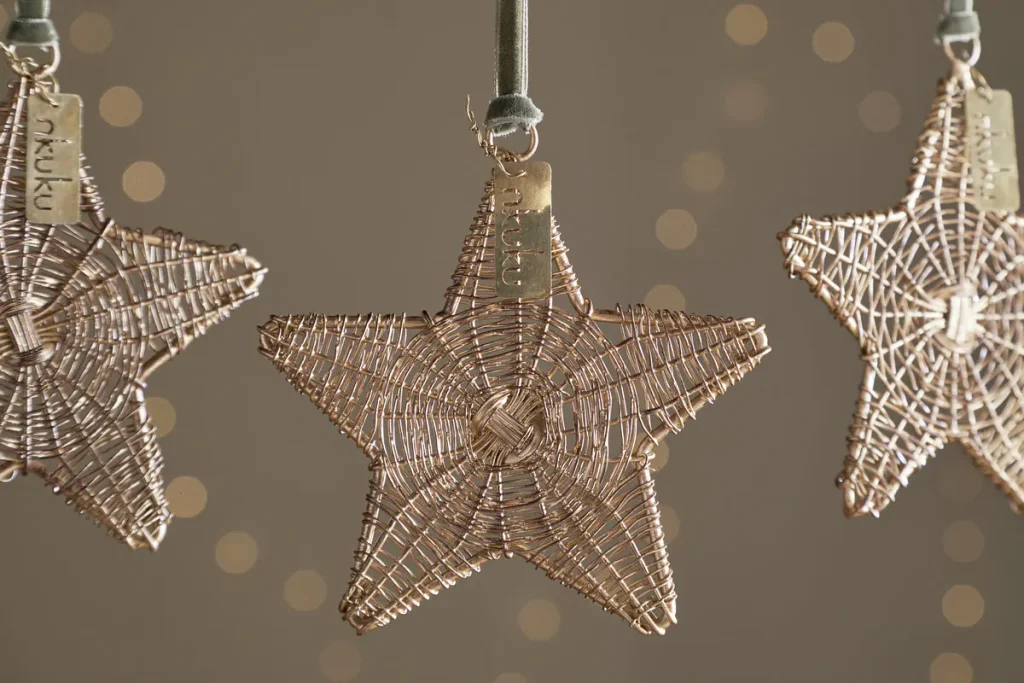
Brass and iron. Metal decorations are durable, can be polished up after years in a box, and often look better with age. Stocking holders, tree toppers and wreath frames are good places for metal.
Ceramic: Tree baubles in ceramic age so well and can be a bit more durable than glass baubles if they are made of thicker ceramic. Just make sure to consider if you have any pets that could knock down decorations before you purchase.
Handmade from Foliage: Every year I love going out to the garden with my mum and seeing what we can chop from the trees and bushes. We make the most wonderful wreaths and centrepiece table decorations and not only can this save lots of money on expensive store bought ones, but it makes for special memories too. Dying foliage can go back to mulch and biodegrade in the garden.
What I skip: Tinsel, glitter, flocked foliage and cheap mixed plastic baubles. They tend to have the shortest lives and the fewest end of life options.
Tinsel, glitter and what you can actually recycle
This is the part that surprised me most when I looked into it. Here in Cornwall, the council is clear that “glass baubles and tinsel can’t be recycled.” It advises wrapping broken baubles or putting them in a sturdy container in your rubbish bin, and taking Christmas lights and electrical decorations to a Household Waste and Recycling Centre rather than putting them in household recycling.
Rules do vary between councils, so check your own local guidance, but the general lesson holds: decorations made to be kept are a far better bet than ones made to be replaced. If you love the sparkle of tinsel, a string of recycled glass baubles or a brass garland gives you that glint without the shedding.
Natural wreath materials are the happy exception. Cornwall Council notes that natural materials on wreaths, like ivy and holly, can go in a home compost system.
Real tree or artificial? An honest answer
I get asked this every year, and the honest answer is “it depends how you use it”. According to Carbon Trust figures reported by Euronews, a typical real tree that is burnt after use has a footprint of around 3.5kg of carbon dioxide, rising to around 16kg if it ends up in landfill, while a two-metre artificial tree is estimated at around 40kg. Wychavon District Council, citing the Carbon Trust, says that if you reuse a plastic tree for ten Christmases or more, it will outweigh the environmental impact of a real tree.
Please treat those as approximate figures: the exact numbers depend on how far a tree travels, what it is made from and what happens to it afterwards. My practical takeaway:
- If you already own an artificial tree, keep using it for as long as you possibly can.
- If you buy a real tree, buy locally where you can and make sure it is chipped or composted through your council’s collection or a local scheme rather than landfilled.
- If you have a small space, a potted tree you bring indoors each year, or a natural fibre tree that lasts for years, are both worth considering.
Growing up my family always had a plastic tree, which they’ve now had for over 15 years, however I personally prefer a real tree if I do buy one. There’s something so special about smelling that pine smell walking through the door after a day of work. After using the tree, we recycle it by giving it to the local goat farm as they love eating the pine needles and bark, so have a look for something similar in your area to give mother nature a new purpose.
How to make decorations last for decades
Choosing well is half of it. Looking after things is the other half, and it costs nothing.
- Store them properly. Wrap glass in tissue or old fabric and keep it in a sturdy box. Egg boxes are perfect for small baubles.
- Keep metal dry. A wipe with a soft cloth before packing away helps stop brass and iron dulling or rusting in a damp loft (a real concern for those of us near the coast).
- Redress, do not replace. A wreath base can be refreshed with ribbon, dried oranges or garden greenery each year so it feels new.
- Add slowly. One or two considered pieces a year builds a collection with real meaning. I love the idea of a decoration that marks each Christmas.
Simple ways to style a natural Christmas
A natural scheme does not need to feel sparse. Layering texture does a lot of the work: jute with brass, wood with clear glass, fresh greenery with warm candlelight. If you read my autumn winter home trends edit, these earthy tones carry straight through into December.
- Stick to two or three materials and repeat them around the room.
- Bring the garden in: a few cut stems of holly, ivy or pine in a vase you already own.
- Use what you have. Bowls of pine cones, ribbons saved from last year and a string of warm white lights go a long way.
My picks
These are the pieces from the Christmas section of my shop that I think are worth keeping. All are from Nkuku, a brand I have looked at closely in my honest Nkuku review. Prices were correct when I wrote this but may change.
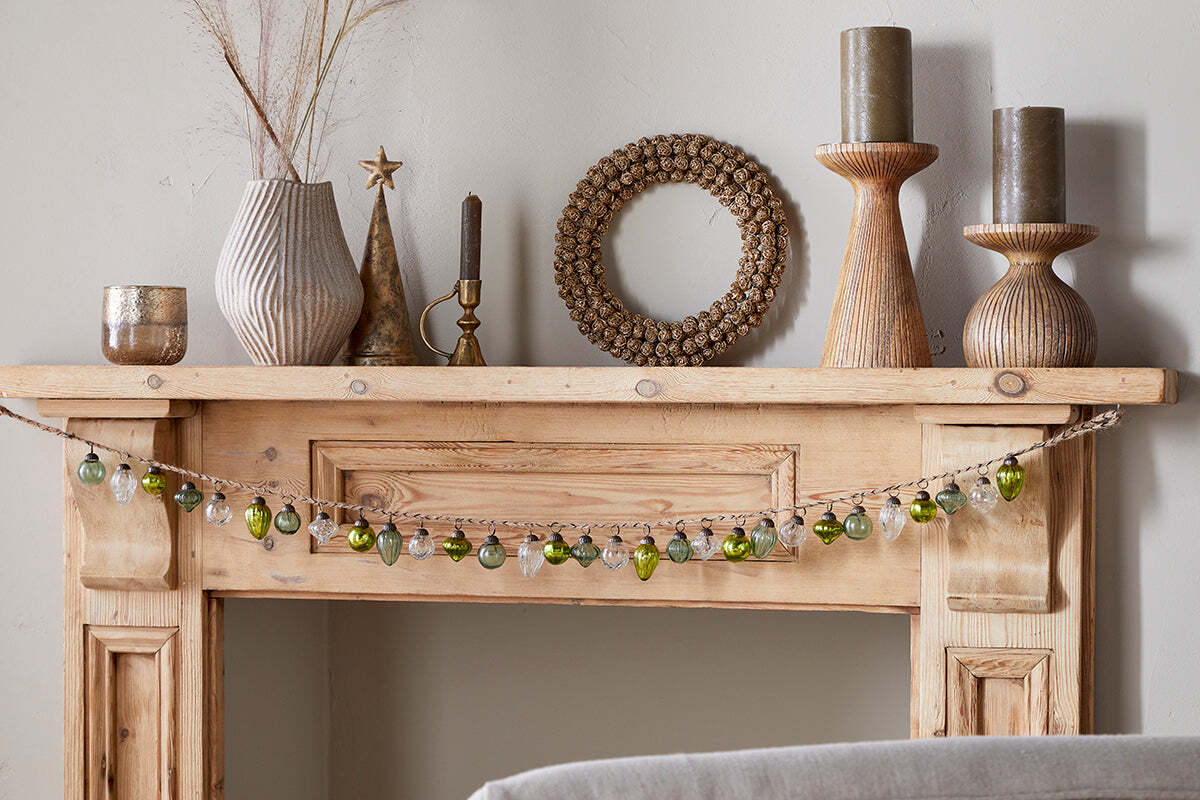
Ekiti Bauble Garland, Mixed Green & Clear
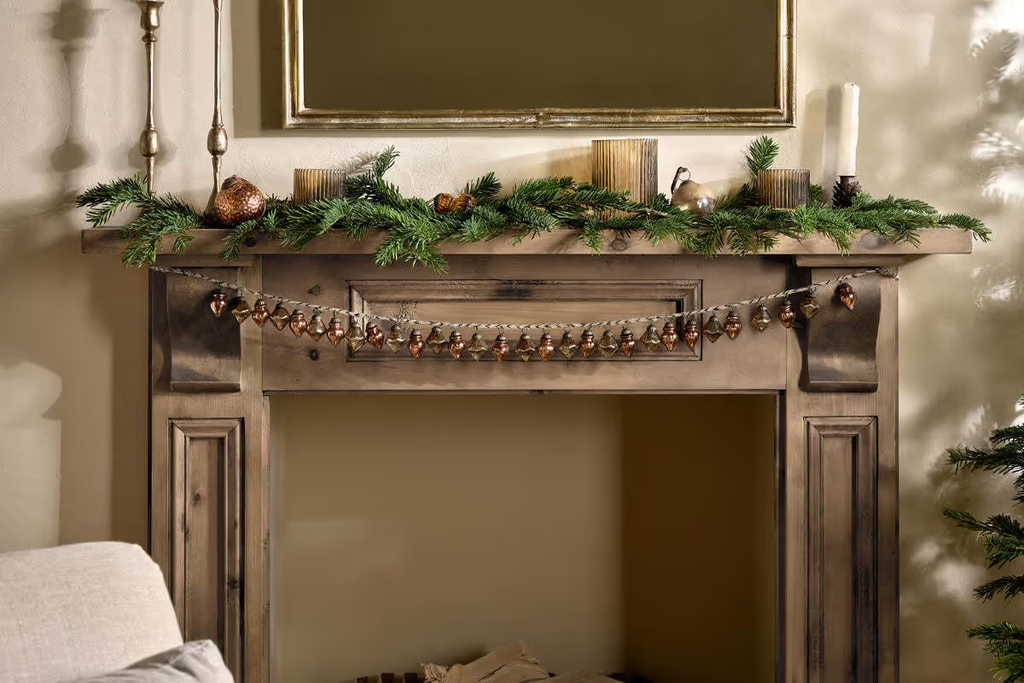
Recycled glass baubles strung along a natural jute garland, so you get sparkle without tinsel.
£45.00
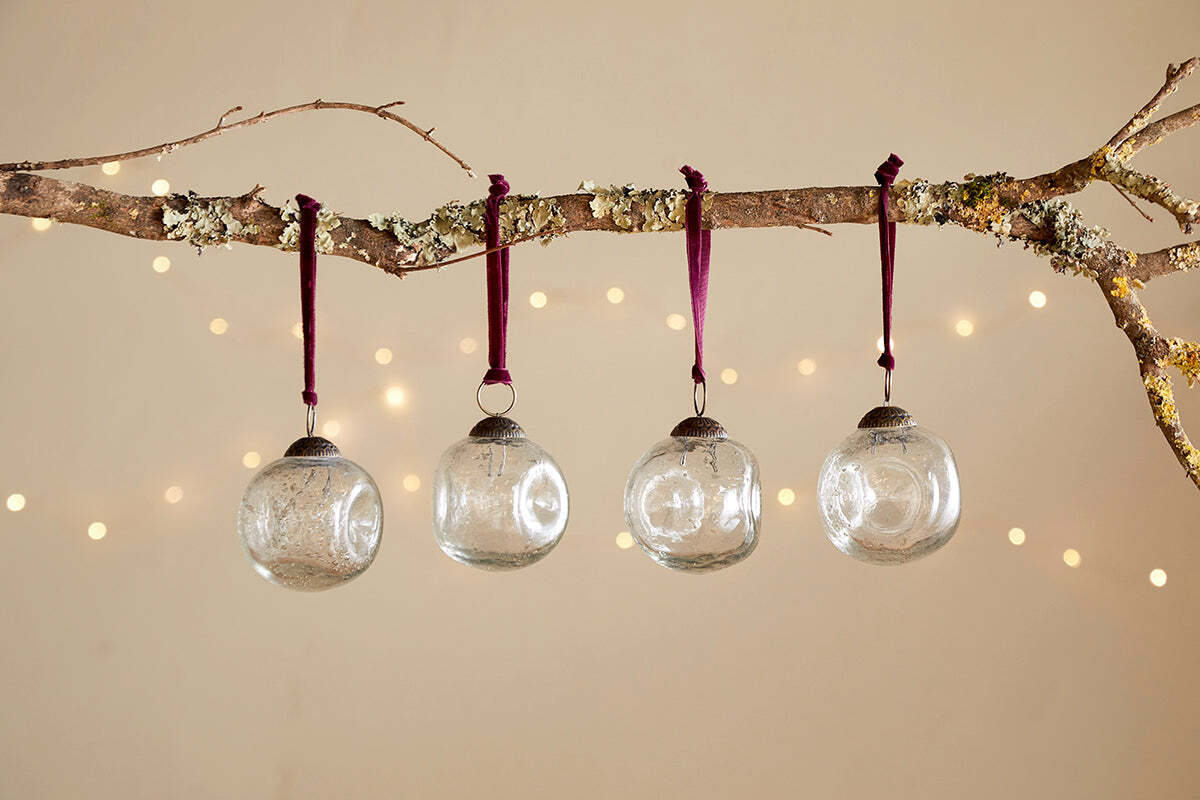
Nishan Pinched Baubles Set Of 4, Clear
Made from recycled glass, and clear glass works with any colour scheme you choose in future years.
£28.00
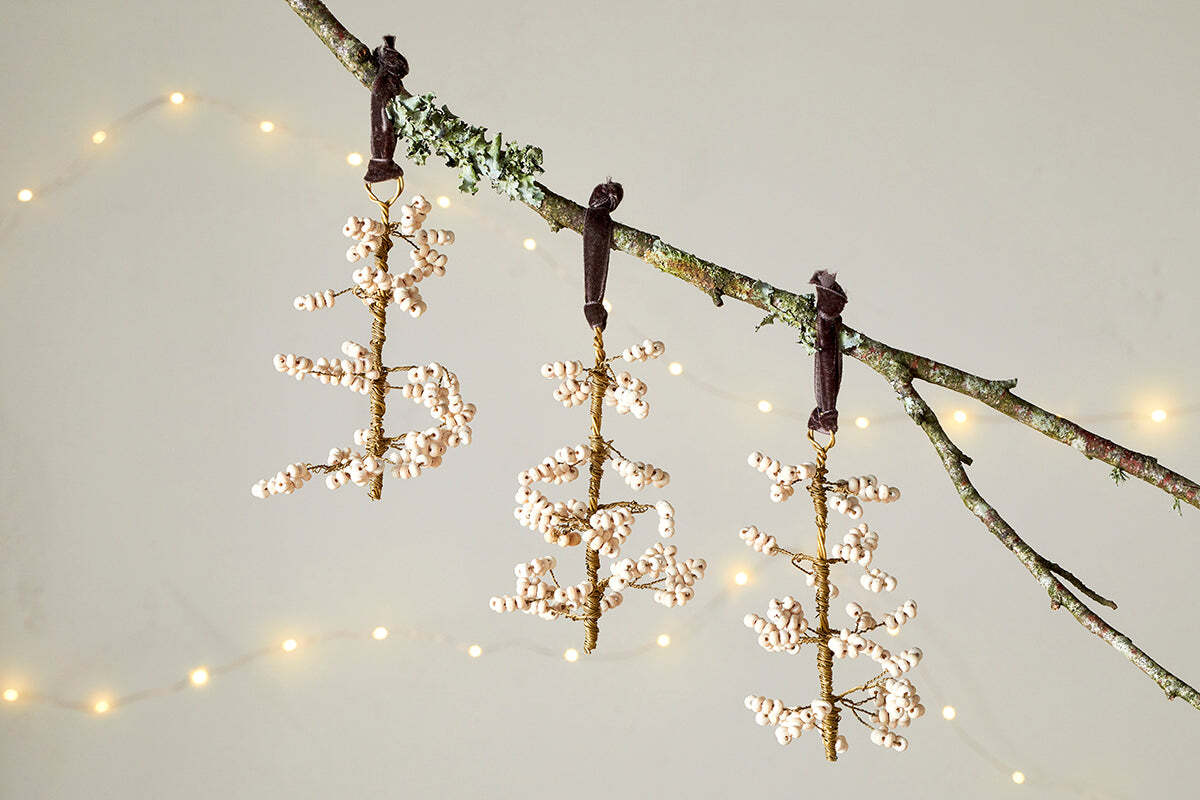
Tanu Mango Wood Beaded Baubles Set Of 3, Brass/Natural
Mango wood beads on brass-coloured wire: warm, unbreakable and lovely on a tree or a garland.
£25.00
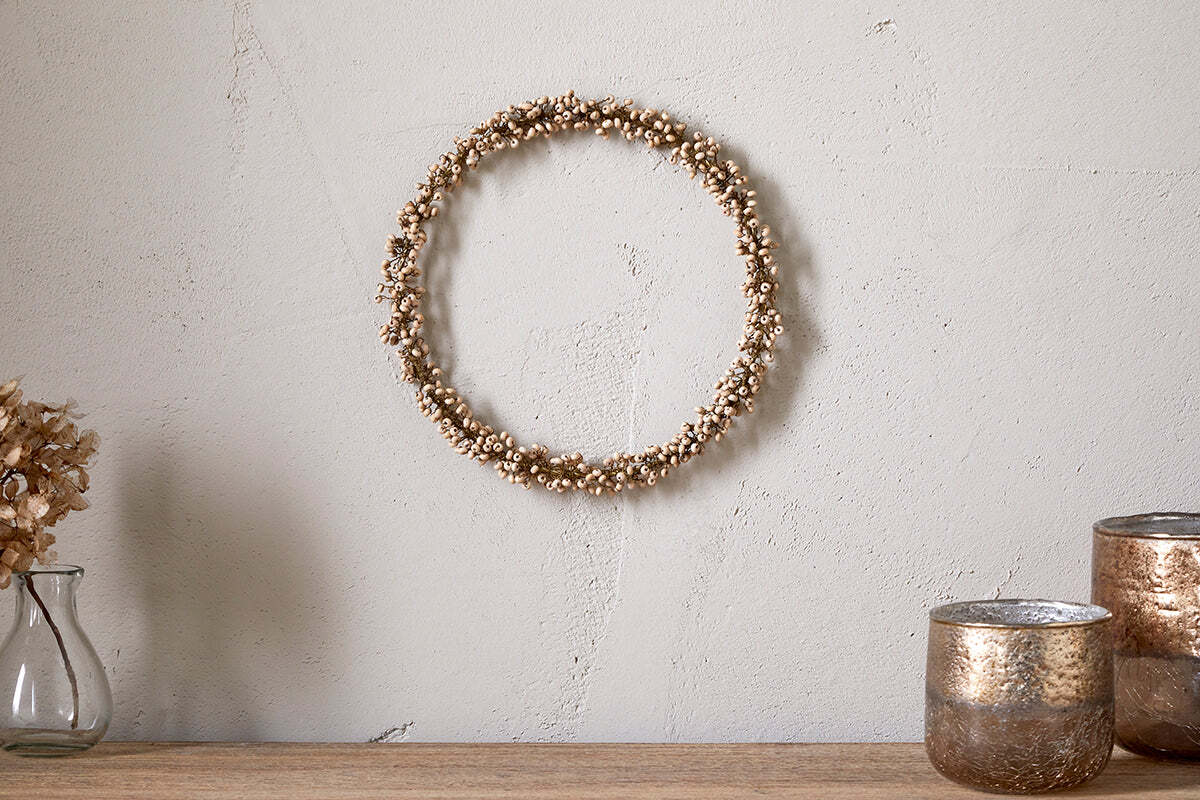
Tanu Mango Wood Beaded Wreath, Brass & Natural
A wreath that will not drop needles or go brown, and that you can tuck fresh greenery into each year.
£35.00
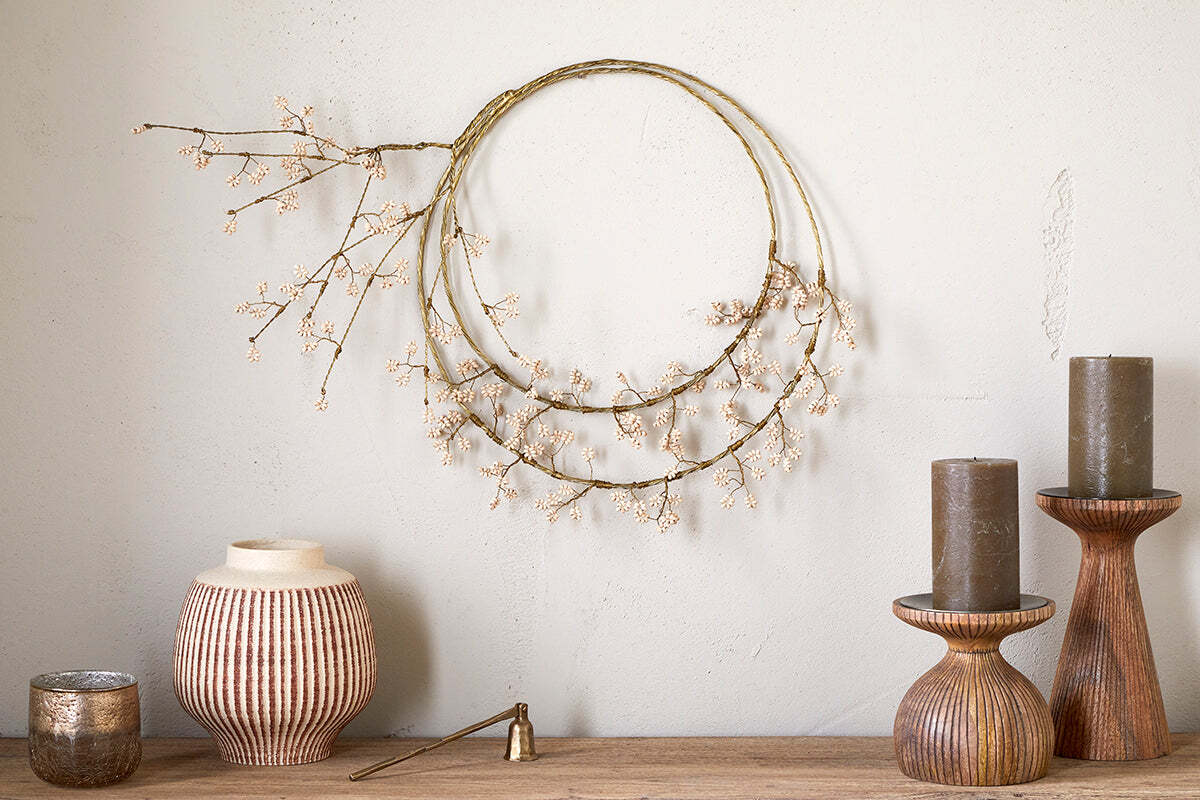
Tanu Layered Mango Wood Beaded Wreath, Brass & Natural
The fuller version of the wreath above, for a front door or a statement over the fireplace.
£65.00
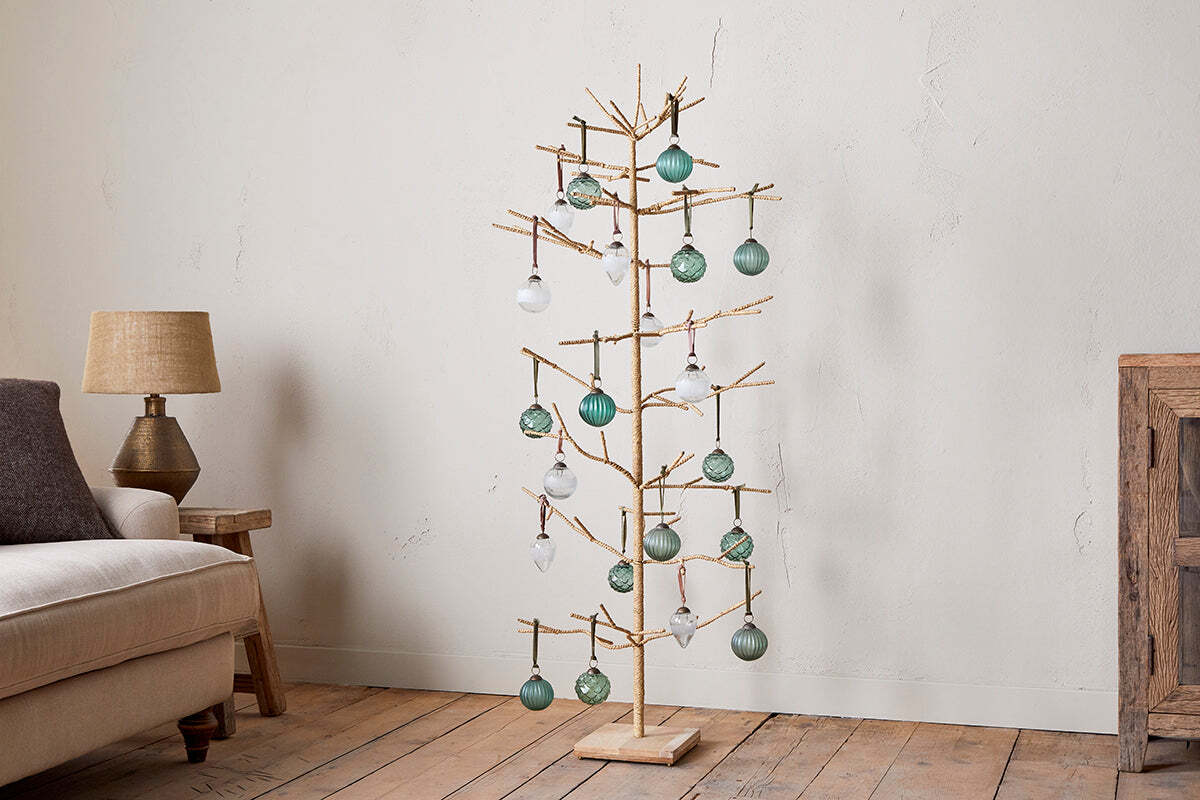
Mala Base Jute Tree, Extra Large, Natural
Woven jute branches for a sculptural tree that comes out year after year. It is an investment, so only for those who will keep it for many Christmases.
£180.00
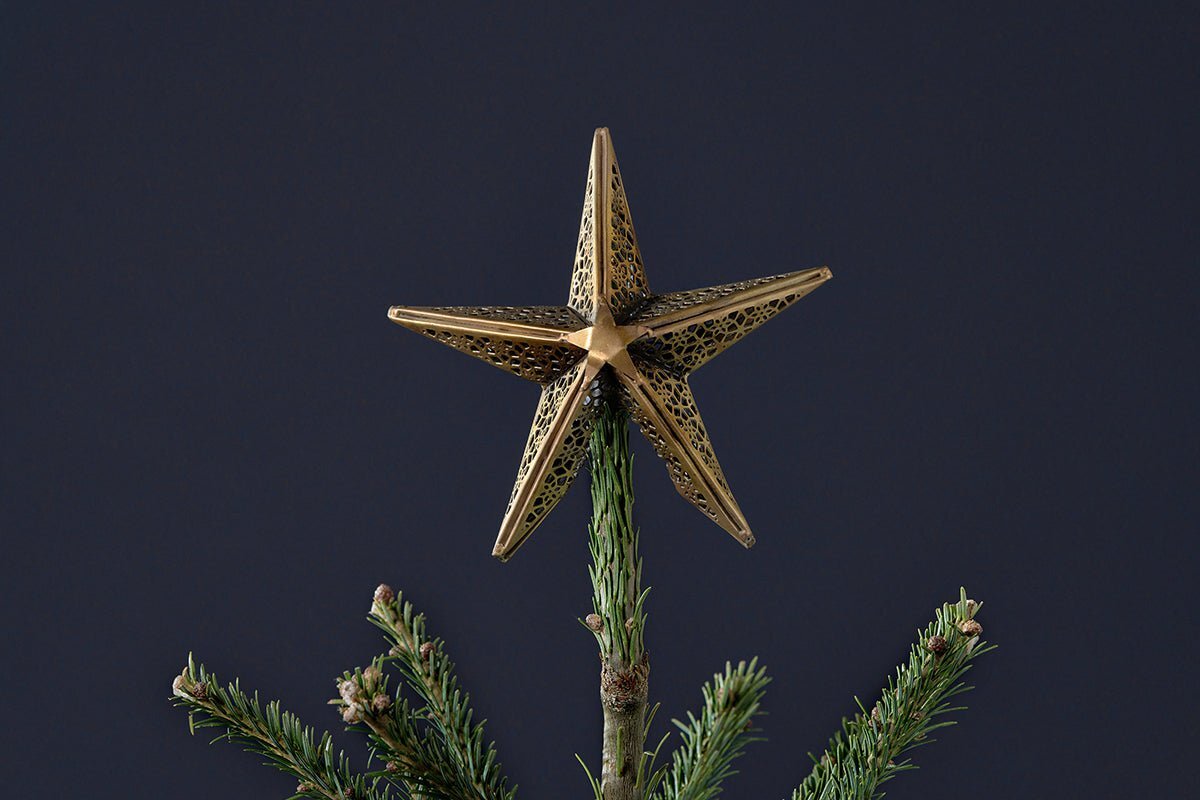
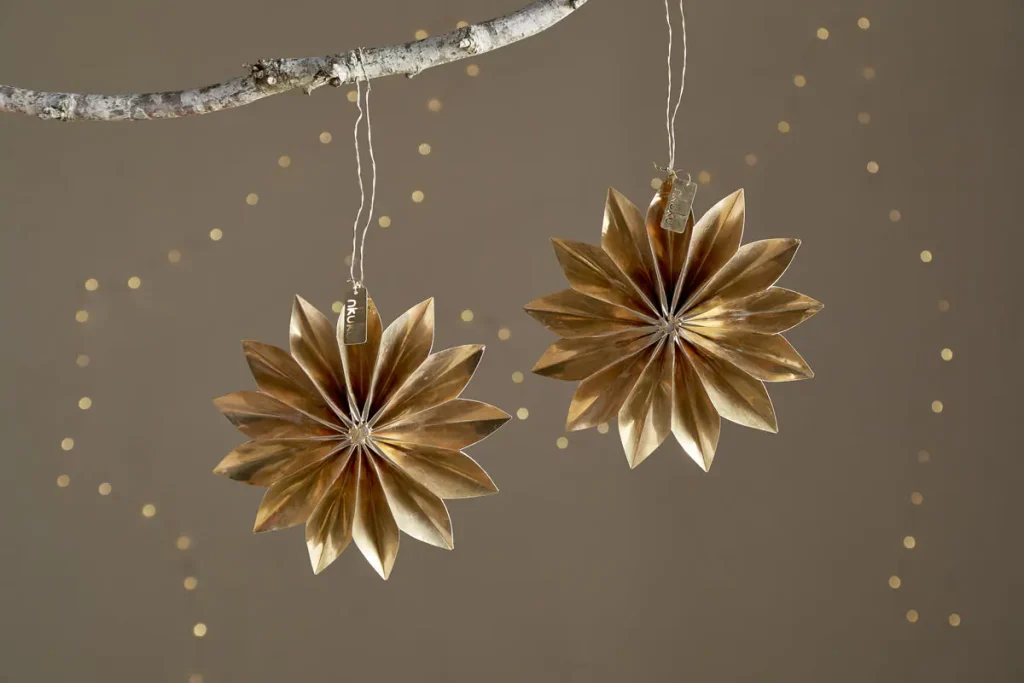
Bishakha Star Tree Topper, Brass
Brass with an antique finish, the kind of topper that gets better with age.
£35.00
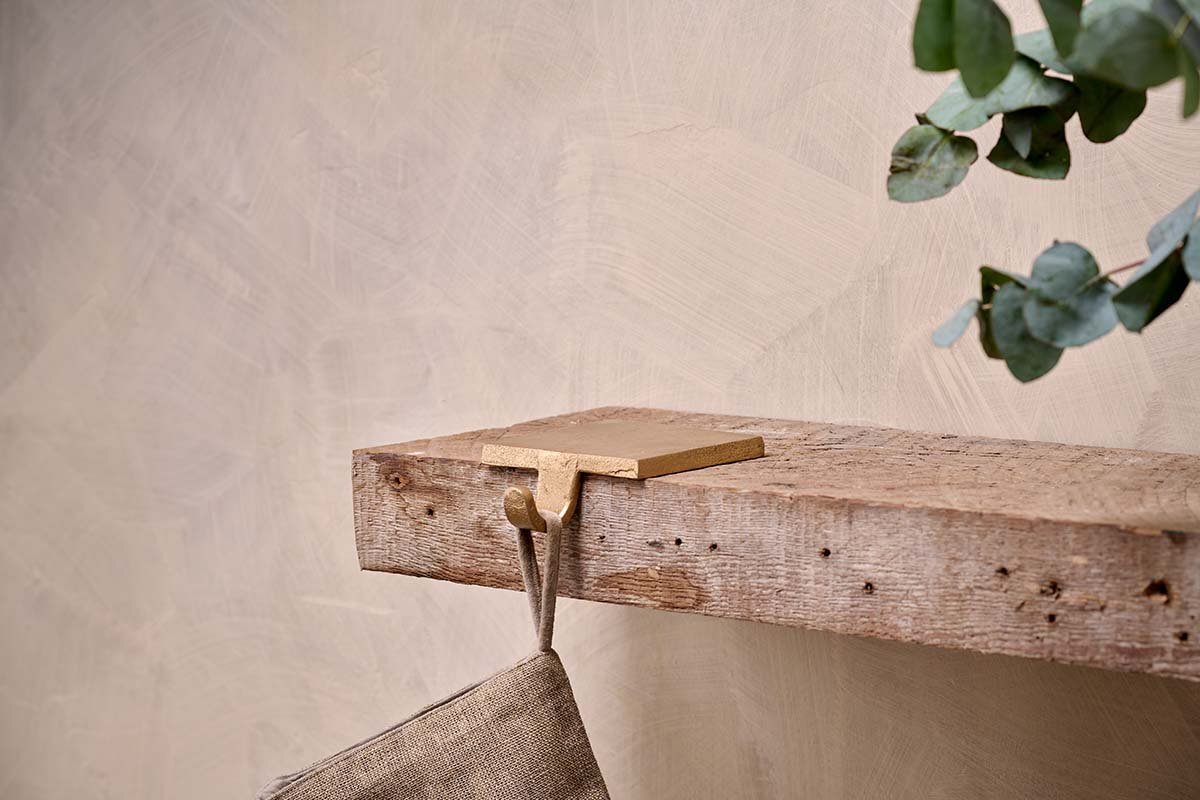
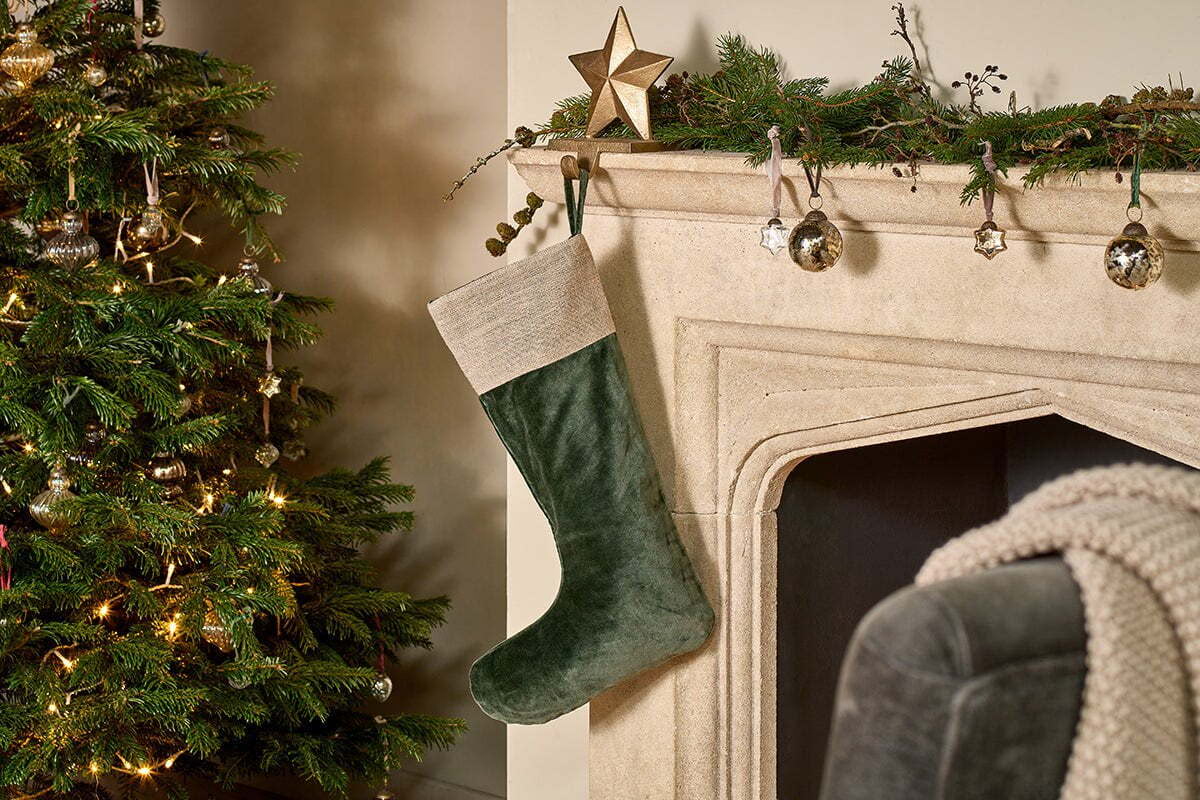
Kotta Stocking Holder, Antique Brass
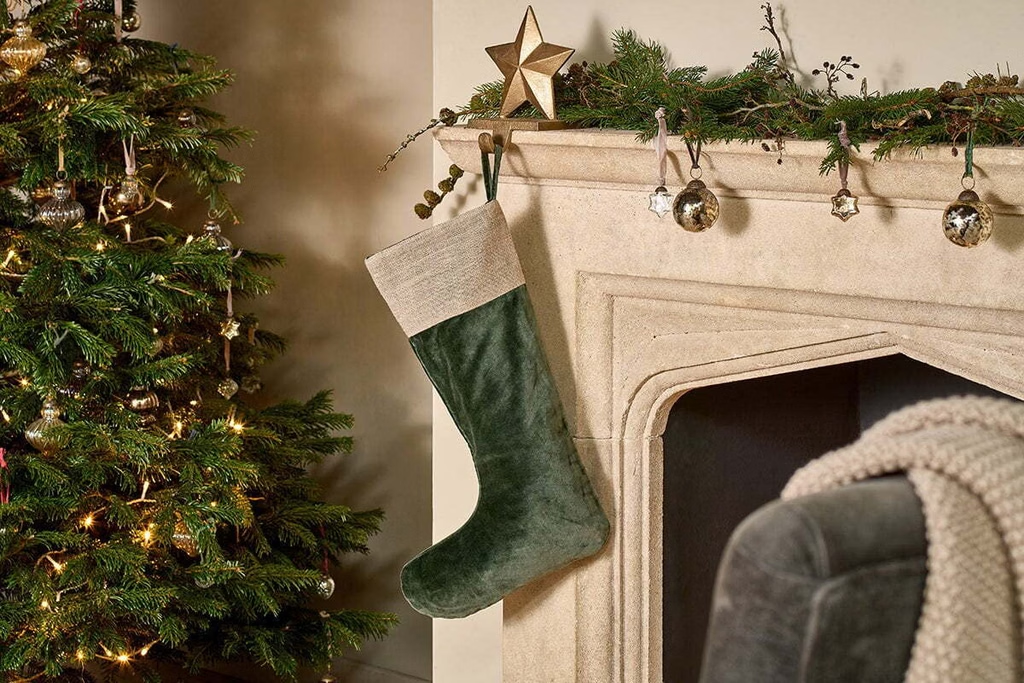
Iron with an aged brass tone: a sturdy, simple piece that will hold stockings for years.
£28.00
How I choose
For this edit I leaned most on four of my eight sustainability lenses: material sourcing (natural, recycled or long-lasting materials), durability (would I still be using it in ten years?), end of life (can it be reused, repaired or passed on?) and business transparency. I left out anything glittered, flocked or made mainly from mixed plastics. You can read more about how I assess materials in my sustainable materials guide.
FAQ
What are the most sustainable Christmas decorations?
The ones you already own, followed by decorations made from durable natural or recycled materials (wood, jute, recycled glass, brass, iron) that you will keep for many years. Fresh greenery from the garden is lovely too, as it can be composted afterwards.
Can you recycle tinsel and baubles?
Often not. Cornwall Council, for example, says glass baubles and tinsel can’t be recycled, and that Christmas lights should go to a Household Waste and Recycling Centre. Check your own council’s website, as rules vary.
Is a real or artificial Christmas tree more eco-friendly?
It depends on use. Figures attributed to the Carbon Trust suggest an artificial tree needs to be reused for around ten Christmases or more to outweigh a real tree that is chipped or burnt afterwards. If you have an artificial tree, keep using it. If you buy real, make sure it is recycled properly.
How can I have a plastic-free Christmas without spending lots?
Use what you have first, bring in garden greenery, dry orange slices for garlands, and add one or two lasting pieces a year rather than a whole new scheme.
How do I store glass baubles so they last?
Wrap each one in tissue or fabric and keep them in a rigid box in a dry place. Egg boxes are ideal for small baubles.
Find your keepers
If you would like to browse more, my full Christmas collection is in the shop, and my gift guides are full of presents made to last. If you would like my seasonal edits straight to your inbox, sign up to The Earthly Post at the bottom of this page. I find the pieces worth keeping, so you only have to look once.
Sources
Sources
- Cornwall Council, Christmas decorations recycling guidance
- Euronews, Fact-check: Is a real or artificial Christmas tree better for the environment? (December 2024)
- Wychavon District Council, The great Christmas tree debate
- Product materials and prices: Earthly Treasures shop listings (checked 10 November 2026)