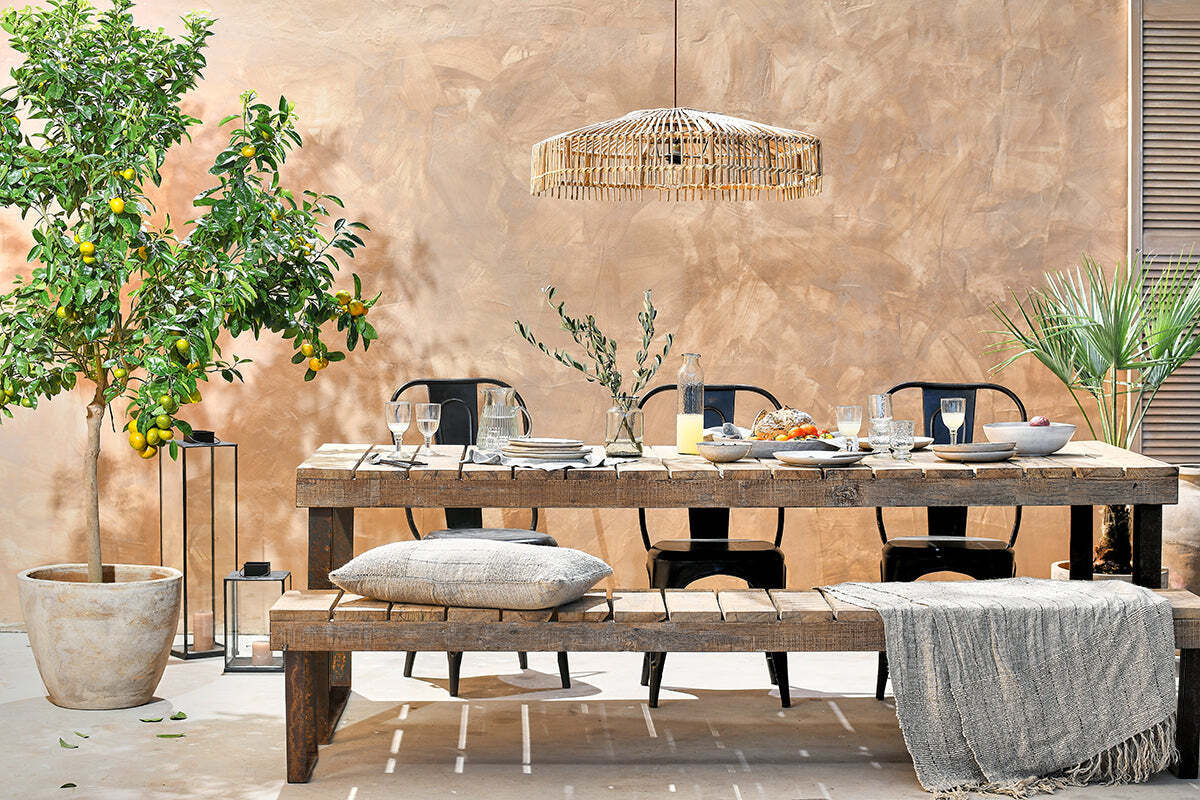

If you’ve been browsing for sustainable home furnishings, you’ve almost certainly come across Nkuku. The Devon-based brand pops up on wishlists, interiors blogs, and ethical shopping guides everywhere, but is it actually as good as it looks? In this Nkuku review we’ve taken a close look at the brand’s sustainability credentials, product range, quality, and customer experience so you can decide for yourself.
Our Nkuku review verdict: Nkuku is one of the most credible ethical home brands available in the UK right now. The B Corp certification, Fairtrade commitment, and artisan-led production are the real deal, not greenwashing. The quality is consistently high, and the aesthetic sits in a sweet spot between natural and refined. It sits at the mid-to-premium end of the market, but for pieces built to last, we think the price reflects the craftsmanship. I’ve tried and tested many of their pieces, and have lived with some of their furniture for years. They are consistently durable and always draw compliments from visitors.
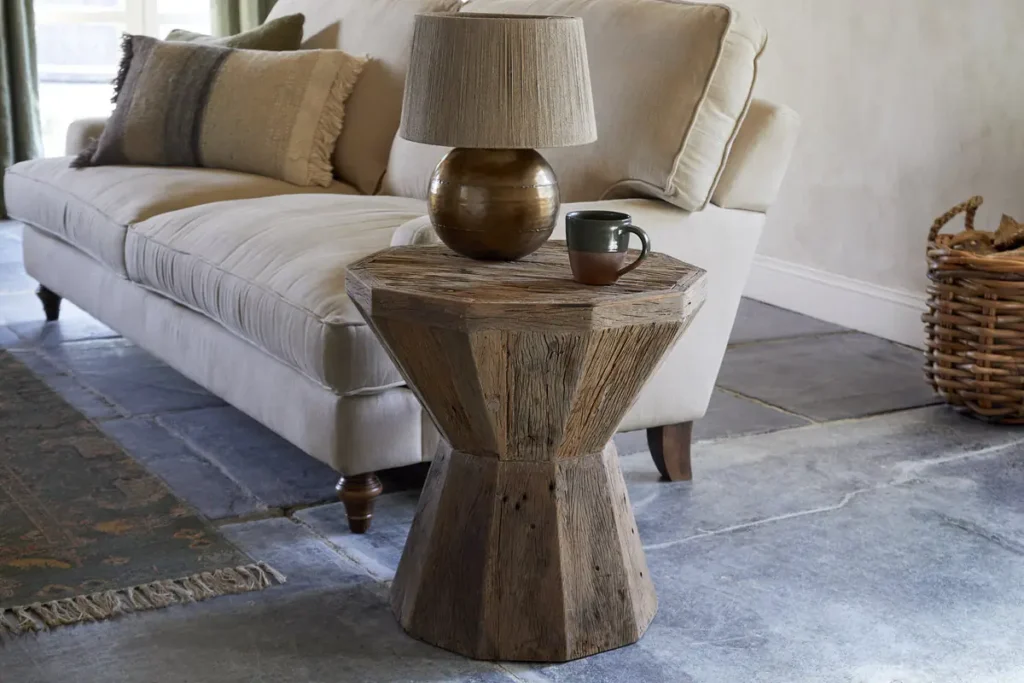
Table of Contents
Who Is Nkuku?
Nkuku is a British lifestyle brand founded on a simple idea: that the things we bring into our homes should be beautiful, honestly made, and built to last. Headquartered in Dartington, Devon, the brand works with skilled artisan makers across India, Indonesia, Africa, and Vietnam, sourcing and producing everything to Fairtrade principles.
The name itself reflects that spirit: Nkuku’s name was inspired by the Swahili word for chicken, “kuku”- a nod to the founders’ time in East Africa and the belief that even small things have value and purpose.
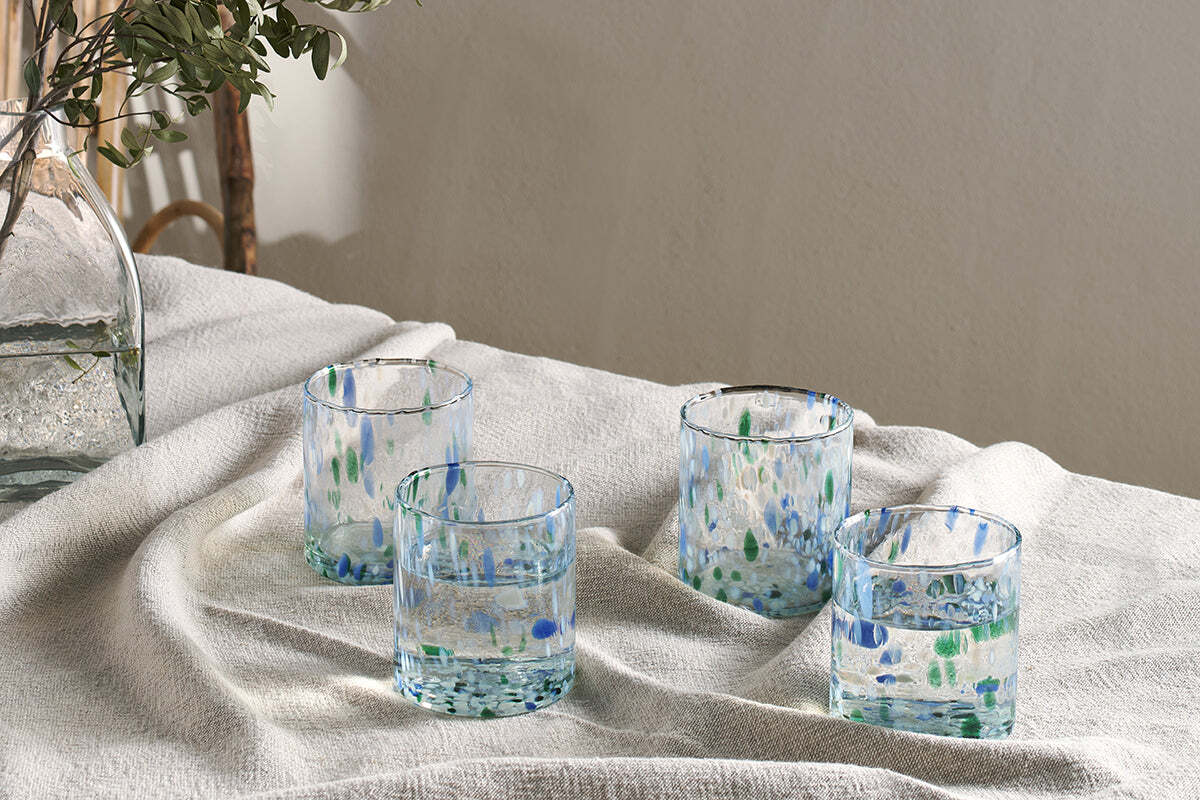
Their aesthetic is what the interiors world tends to call “natural boho” (think warm mango wood tones, aged brass, hand-blown glass, and woven jute), but grounded enough to work in traditional, Scandi, and contemporary spaces too.

Sustainability Credentials
Sustainability in furniture isn’t one thing. It’s a set of overlapping considerations, and very few brands get full marks across all of them. At Earthly Treasures, when we review a brand’s sustainability, we look across eight areas: third party certifications, material sourcing, manufacturing process, durability and longevity, transport and packaging, end-of-life and circularity, fair labour and working conditions, and broader business model and transparency. Here’s how Nkuku measures up.
1. Third-Party Certifications
B Corp, certified since January 2023, score 96.4
B Corp is probably the most meaningful business-level sustainability certification available to UK companies. It’s awarded by B Lab, an independent non-profit, and requires companies to meet verified standards across governance, workers, community, environment, and customers. Crucially, it’s not self-declared. It involves a scored assessment, third-party verification, and recertification every three years.
The threshold to qualify is 80 and the maximum score is 200. The median score for ordinary businesses that complete the assessment is 50.9. Nkuku scored 96.4 out of 200.
To give that some context, here’s how their score breaks down across B Lab’s five categories:
- Workers (28.6): Covers financial security, health and safety, career development, and employee satisfaction, a strong score in what is often a difficult area for product-based businesses.
- Community (26.2): Includes supply chain management (9.7) and a specific Impact Business Model bonus (4.8) for supply chain poverty alleviation, recognising their Fairtrade-principled approach to artisan sourcing.
- Environment (21.4): Led by Land & Life (10.6) and Air & Climate (4.2). Solid, though as with most brands there’s room to grow in water stewardship.
- Governance (15.8): Includes a Mission Locked bonus (10 points) for formally embedding their social and environmental mission into their business structure.
- Customers (4.0): A smaller section covering product quality, ethical marketing, and data practices.
It’s worth being clear about what B Corp does and doesn’t tell you. It’s a whole-business assessment, not a product-level certification. It confirms that Nkuku operates as a responsible business, but it doesn’t verify, for example, that every individual material in every product meets a specific environmental standard. For that, you’d want product-level certifications.
Product-level certifications
From our research, Nkuku does not currently hold product-level certifications such as FSC (for timber), GOTS (Global Organic Textile Standard), or OEKO-TEX (for textiles). This is worth knowing if those standards matter to you for a specific purchase, though it’s also worth noting that many genuinely ethical brands at Nkuku’s scale don’t hold all of these, for reasons of cost and certification complexity rather than lack of effort. Their material choices (mango wood by-product, reclaimed timber, natural fibres) reflect sound sourcing decisions even without formal product-level marks. If you want certainty on a specific material certification, it’s worth checking the individual product page or contacting Nkuku directly.
2. Material Sourcing
Nkuku’s material choices are one of their stronger suits. Mango wood (one of their most-used materials) is a genuine by-product of the mango fruit industry, meaning trees are felled at the end of their fruiting life rather than grown specifically for timber. Reclaimed wood avoids new deforestation entirely. Hemp, jute, rattan, corn husk, and water hyacinth are all rapidly renewable natural fibres. They also incorporate recycled glass and repurposed offcut materials from other industries (such as cotton waste from textile manufacturing). These are specific, verifiable choices, not vague claims about “natural materials.”
3. Manufacturing Process
Nkuku works with artisan makers across India, Indonesia, Africa, and Vietnam, producing pieces by hand using traditional joinery and craft techniques. This inherently means lower mechanised energy inputs than mass factory production. That said, Nkuku don’t publish detailed data on energy use, water consumption, or chemical inputs in their dyes and finishes, so this area is harder to verify independently. It’s worth noting this is common even among genuinely ethical brands; granular manufacturing data is difficult and costly to audit and report. What we can say is that handcraft production is generally a lower-impact process than industrial-scale manufacturing.
4. Durability and Longevity
This is perhaps Nkuku’s most underappreciated sustainability credential. Their “slow design” philosophy is deliberate: new products are introduced carefully to complement existing collections, not replace them. The intention is that a piece bought five years ago still works alongside something bought today. Build quality is reported consistently as solid, with traditional joinery, durable natural materials, and construction designed for a long lifespan rather than disposability. In sustainability terms, a well-made piece that lasts twenty years is often far better than a “greener” material that wears out in three.
5. Transport and Packaging
Nkuku ships products by sea freight rather than air freight, a meaningful distinction, since air freight generates significantly more carbon emissions per item. On packaging, they’ve committed to removing polystyrene from all packaging and replacing plastic bubble wrap with corrugated cardboard. Their head office operates as zero-to-landfill. These are genuine, operational commitments rather than aspirational statements.
6. End-of-Life and Circularity
This is an area where Nkuku, like most furniture brands, doesn’t yet publish specific guidance. Their use of natural, single-material components (solid wood, brass, jute) does mean that many pieces are inherently more separable and recyclable at end of life than composite flat-pack furniture, but there’s no formal take-back scheme or circularity programme in place as far as we can verify. Something to watch for as the brand develops.
7. Fair Labour and Working Conditions
Nkuku is committed to the ten principles of Fairtrade across their supply chain, covering fair pay, safe working conditions, and workers’ rights for the artisan communities they work with in India, Indonesia, Vietnam, and Africa. This is independently principled rather than formally Fairtrade-certified at product level, but the Fairtrade framework is a well-established benchmark. Their B Corp certification, awarded after independent assessment across social, environmental, and governance criteria, also covers labour practices as part of the evaluation. This is one of the more credible areas of their sustainability story.
8. Business Model and Transparency
Nkuku holds B Corp certification, which remains one of the most rigorous independent business sustainability standards available. It requires transparency across supply chain, governance, environmental impact, and social performance, not just a claim, but a scored assessment. They’re reasonably open about where products are made and the materials used, though like most brands at their scale, there are gaps in granular supply chain reporting. The slow design philosophy and commitment to longevity over short term trends reflects a genuine business model commitment, not just marketing language.
Overall: Nkuku performs strongly on material sourcing, fair labour, durability, and packaging, the areas where their commitments are most concrete and verifiable. Manufacturing detail and end-of-life circularity are less developed, but this is true of almost every furniture brand at this stage, and their B Corp certification provides at least an independent baseline of accountability. For a brand of their size and positioning, it’s a credible and honest sustainability picture.
What Does Nkuku Sell?
Nkuku’s range covers most of the home, which is part of what makes them useful as a go-to ethical brand. Here’s a breakdown:
Furniture
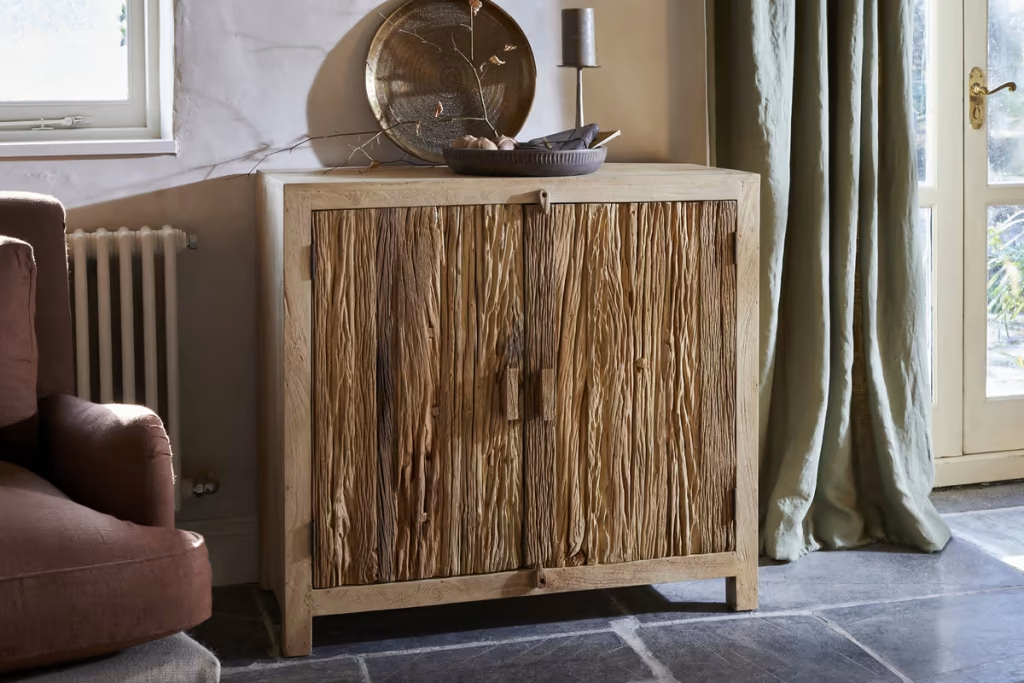
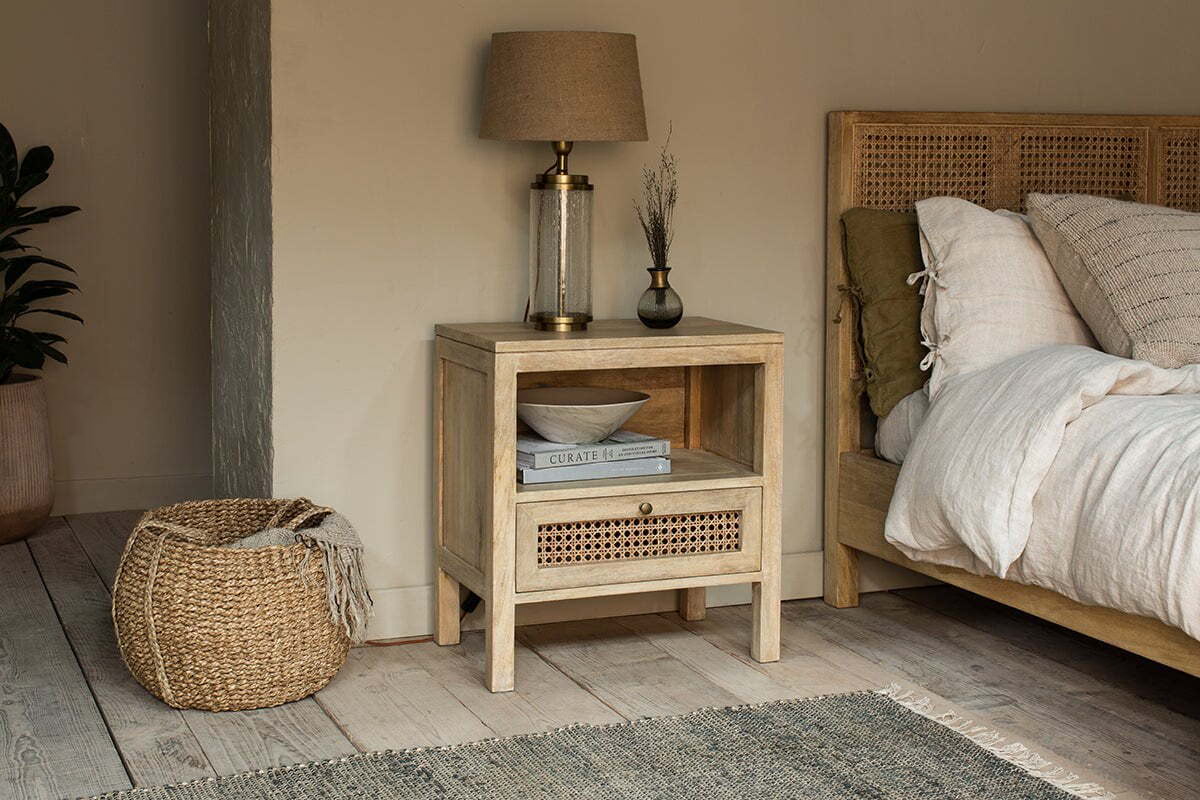
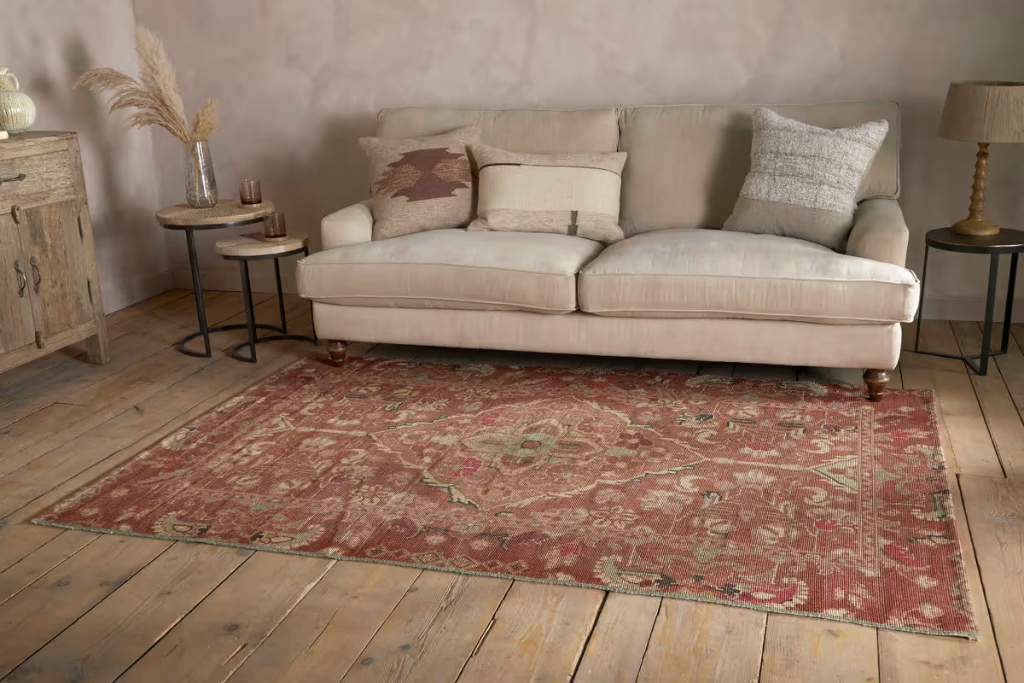
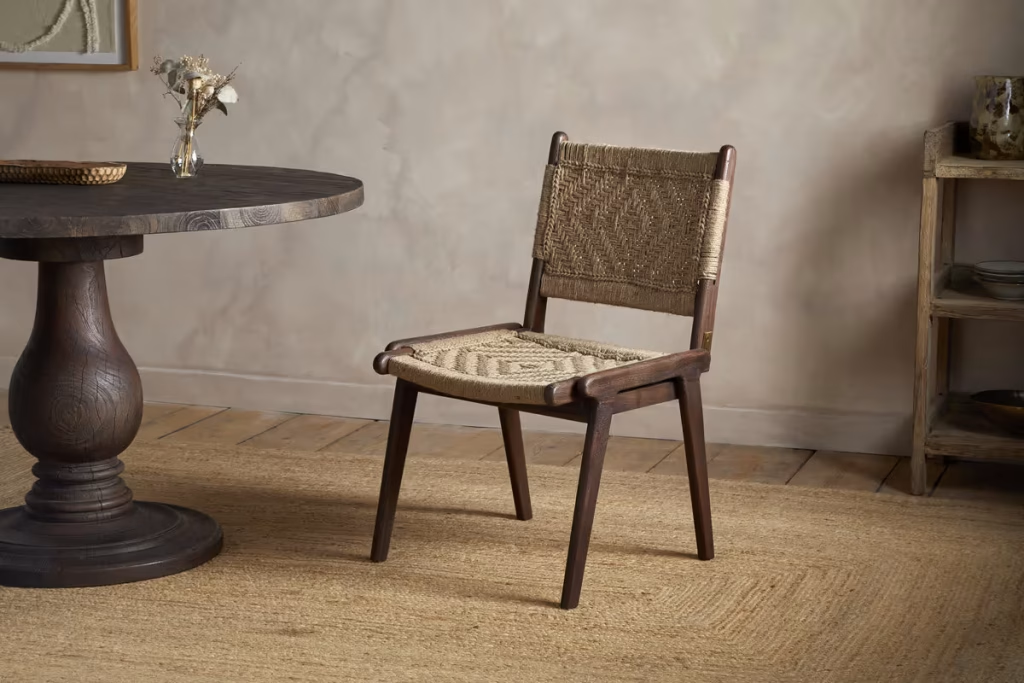
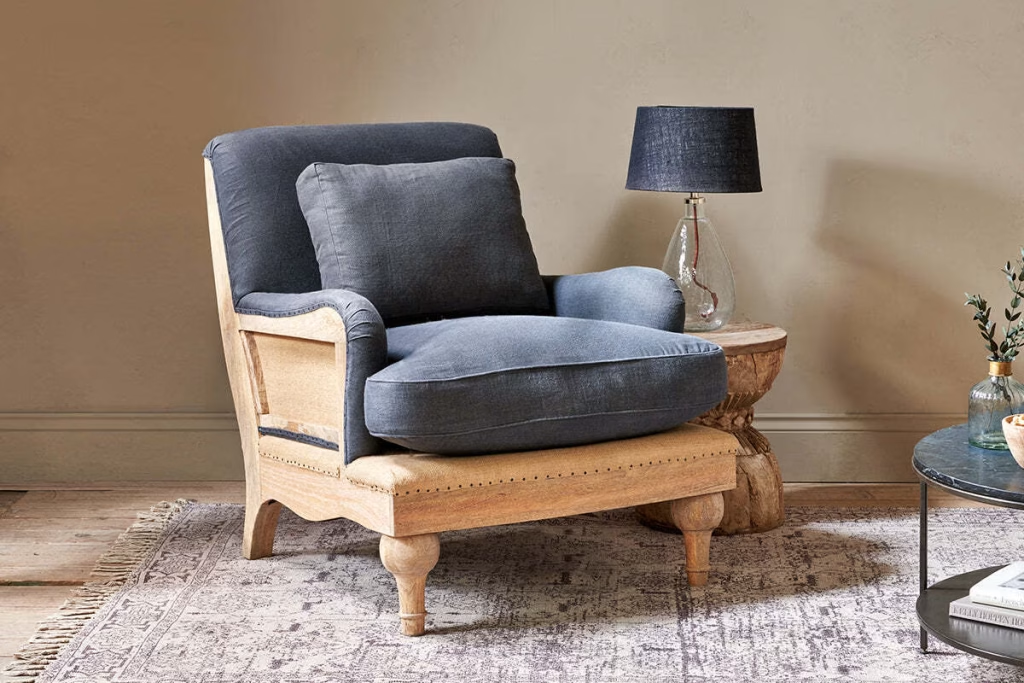
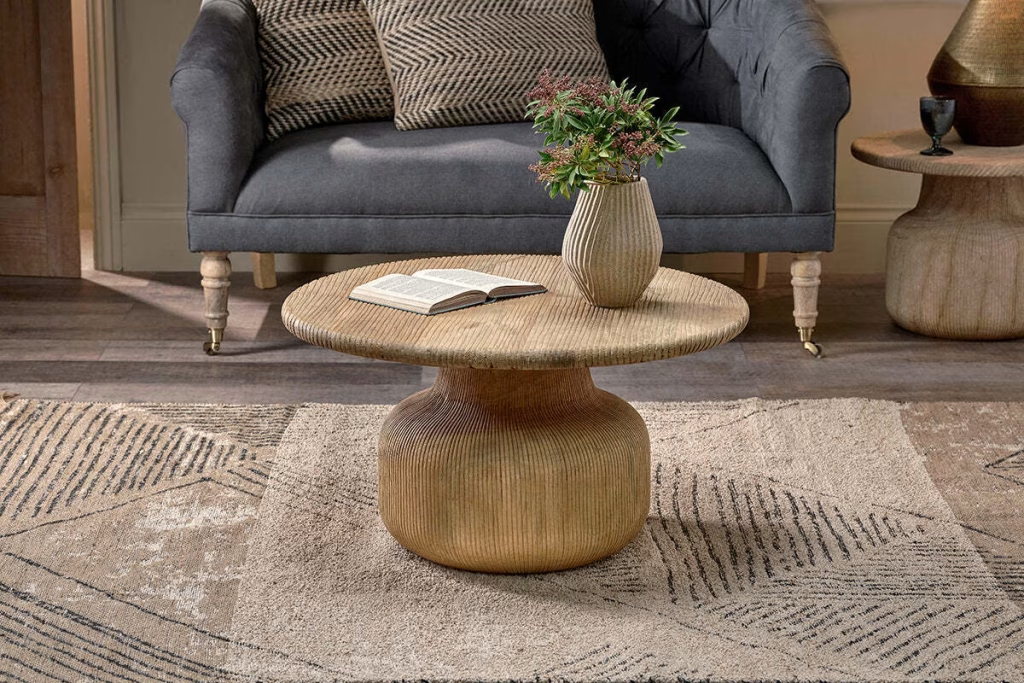
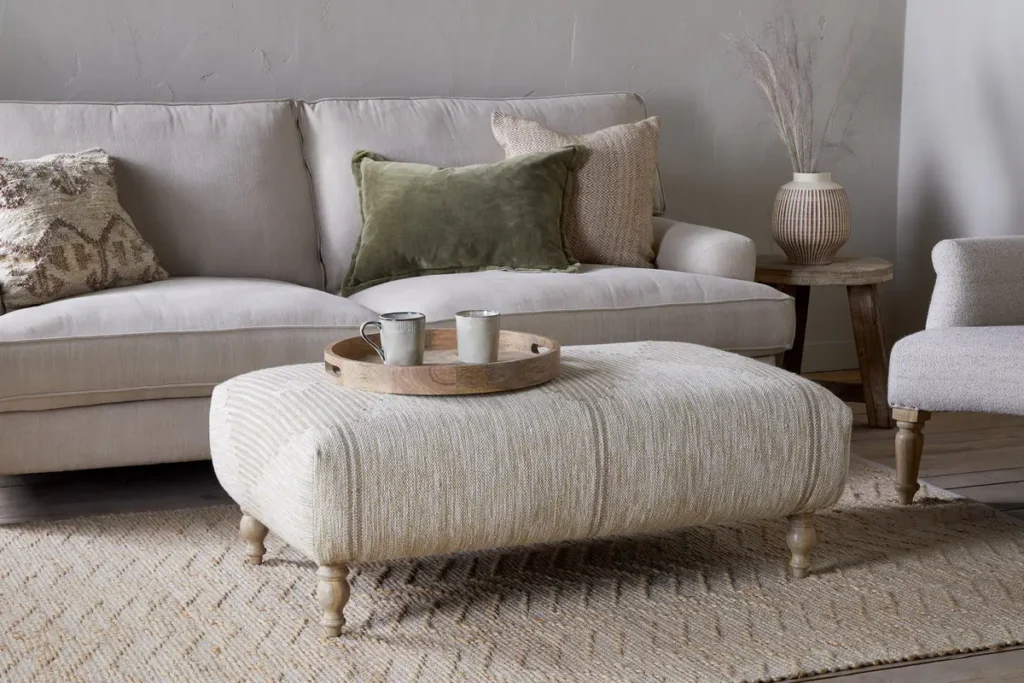
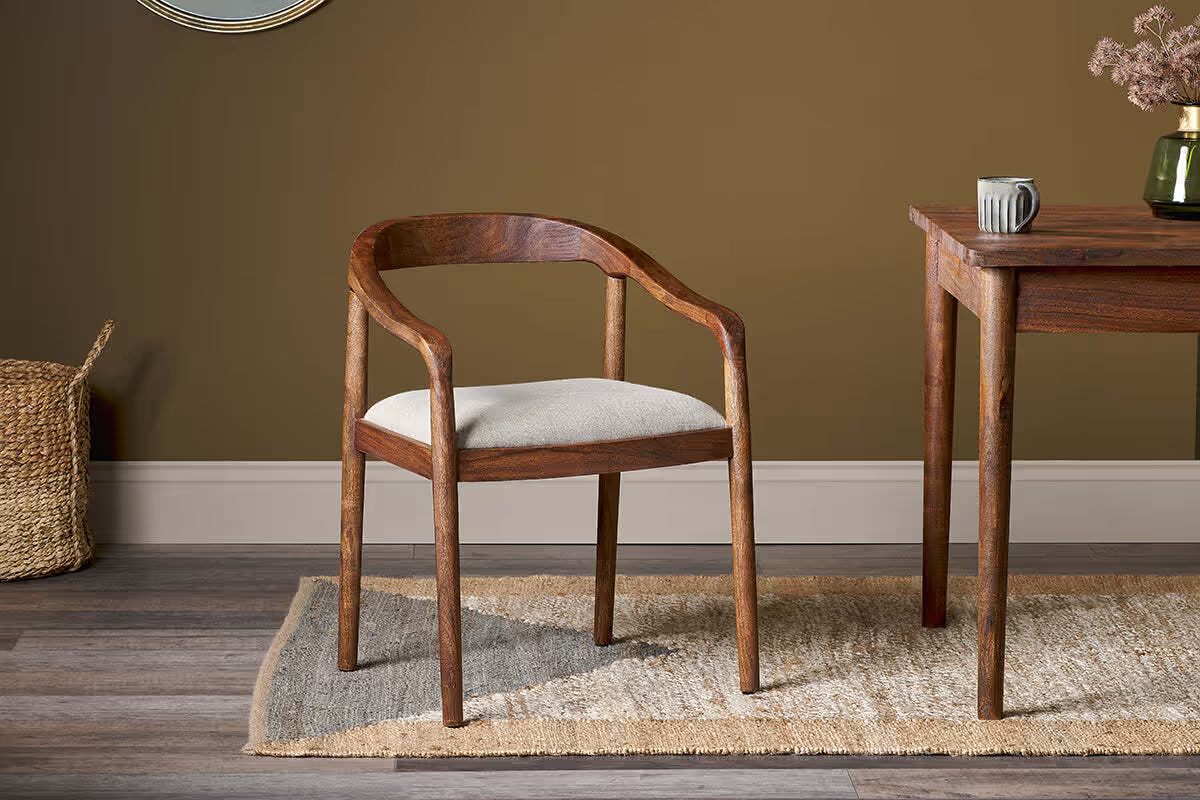
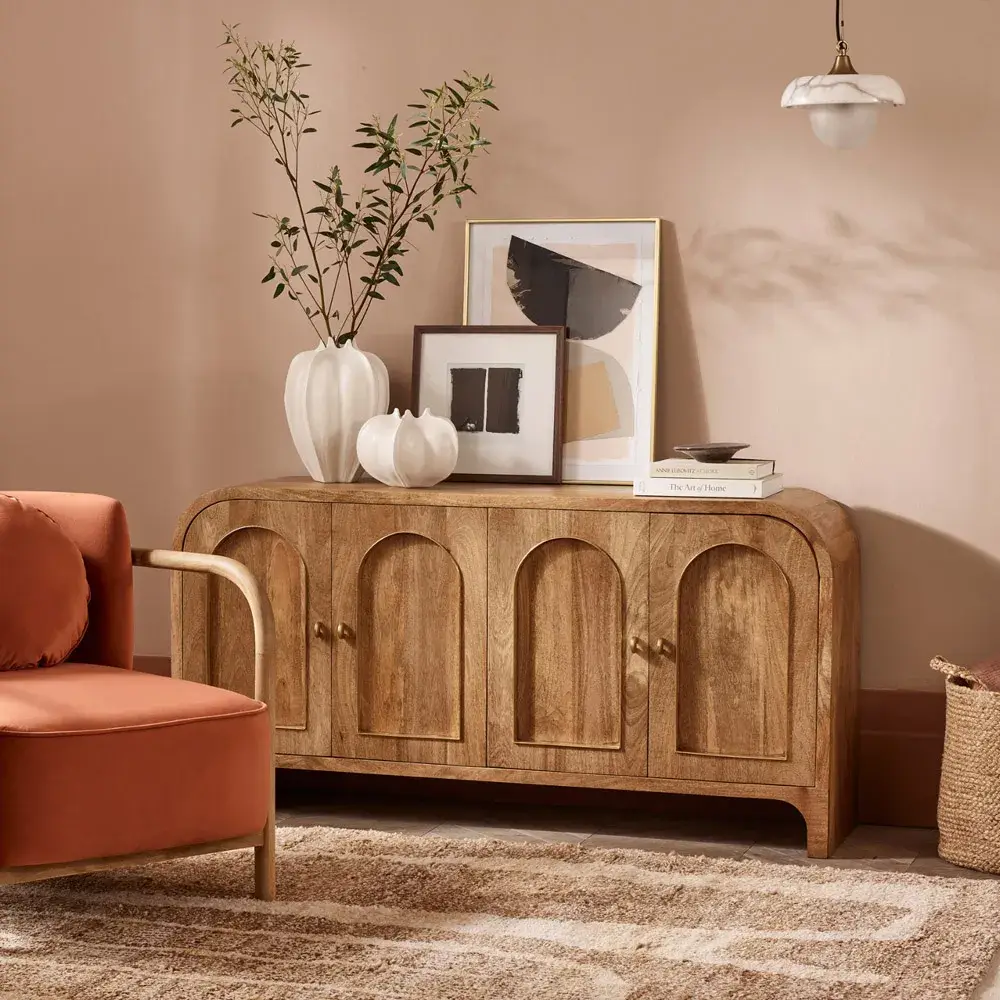
Their furniture range includes coffee tables and side tables in mango wood, iron, and brass; dining tables in reclaimed wood and sustainable mango wood; dining chairs and counter stools in aged leather, jute, and natural cane; footstools and benches; and shelving and storage in reclaimed wood and industrial iron combinations. We love how many of their pieces have a rustic feel and some of their items leave the wood unfinished so there are no toxic finishes, which is great for choosing whether you want to leave the wood unfinished, or to finish it with a natural hardwax finish.
Browse Nkuku Furniture at Earthly Treasures:
Lighting
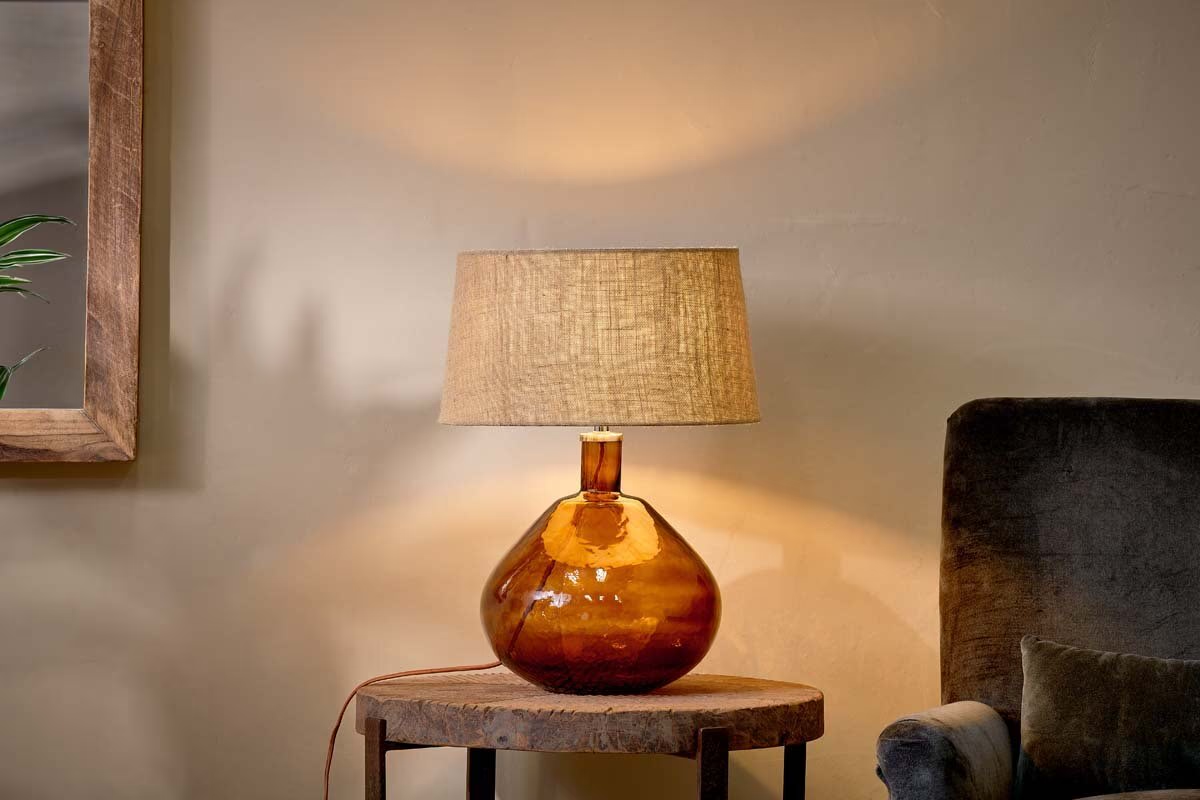
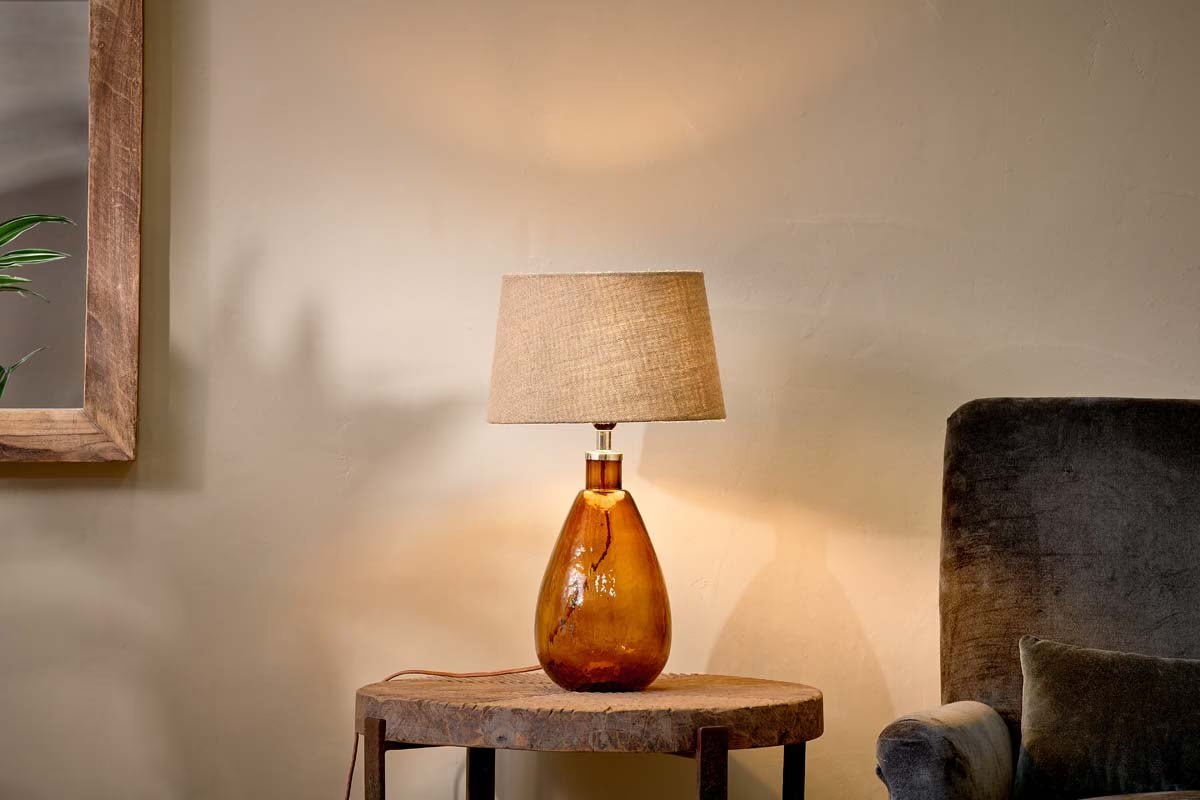
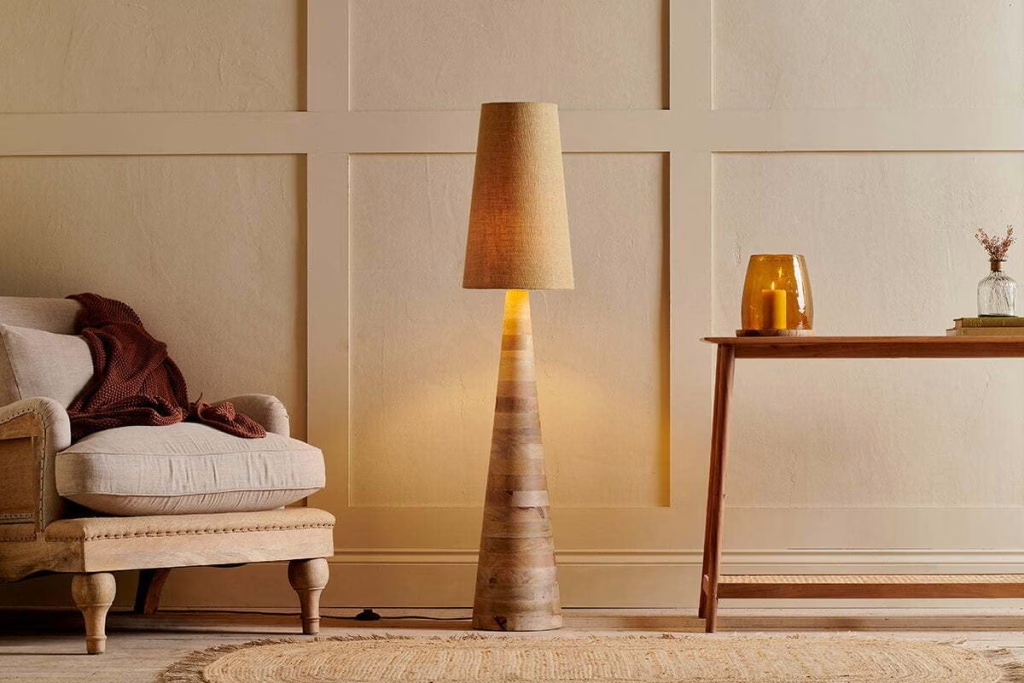
Statement pendants, table lamps, and wall lights are a Nkuku strength. Expect hand-blown glass shades, hand-etched detailing, and aged metal finishes. The lighting works particularly well in kitchens, hallways, and living rooms where you want a focal point.
Browse Nkuku Lighting at Earthly Treasures:
Home Accessories and Decor
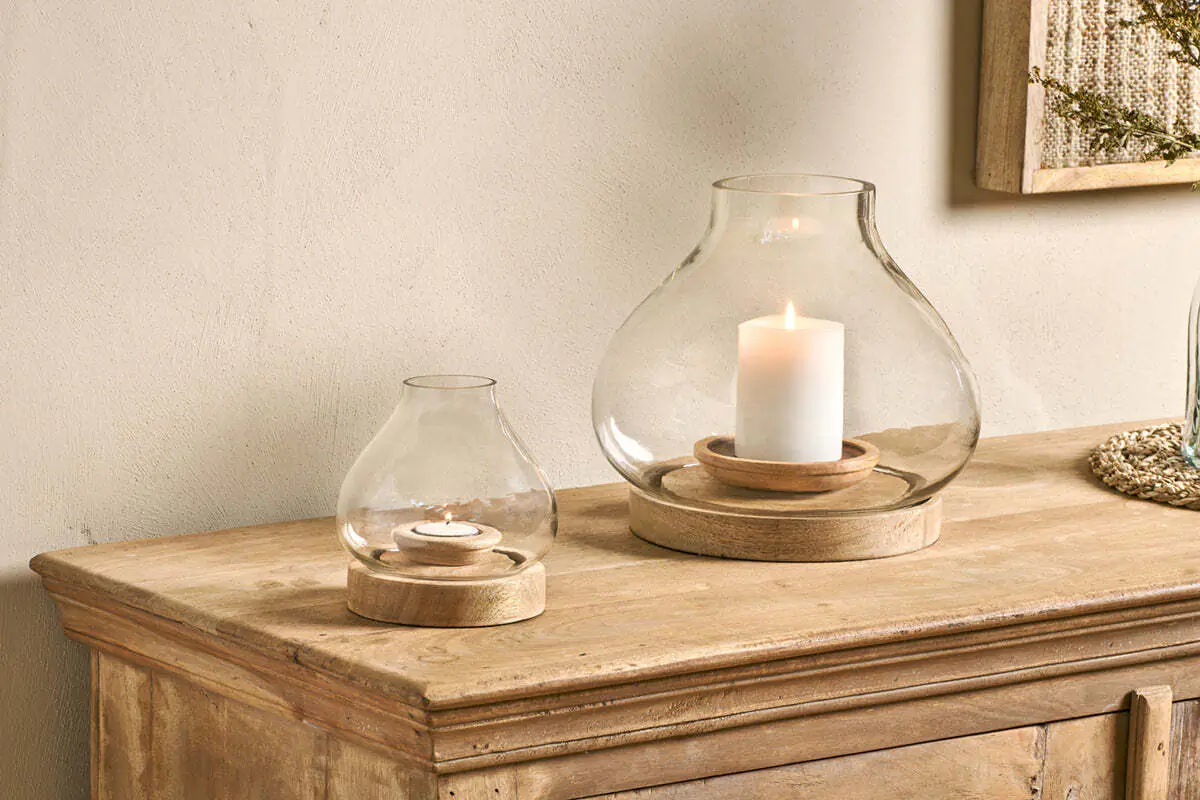
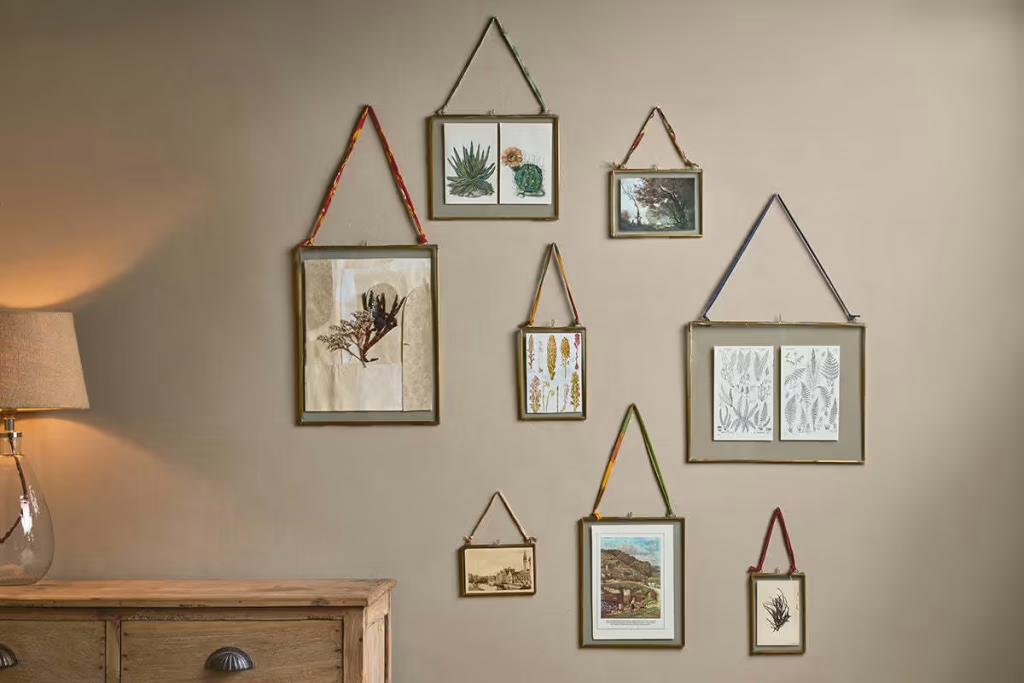
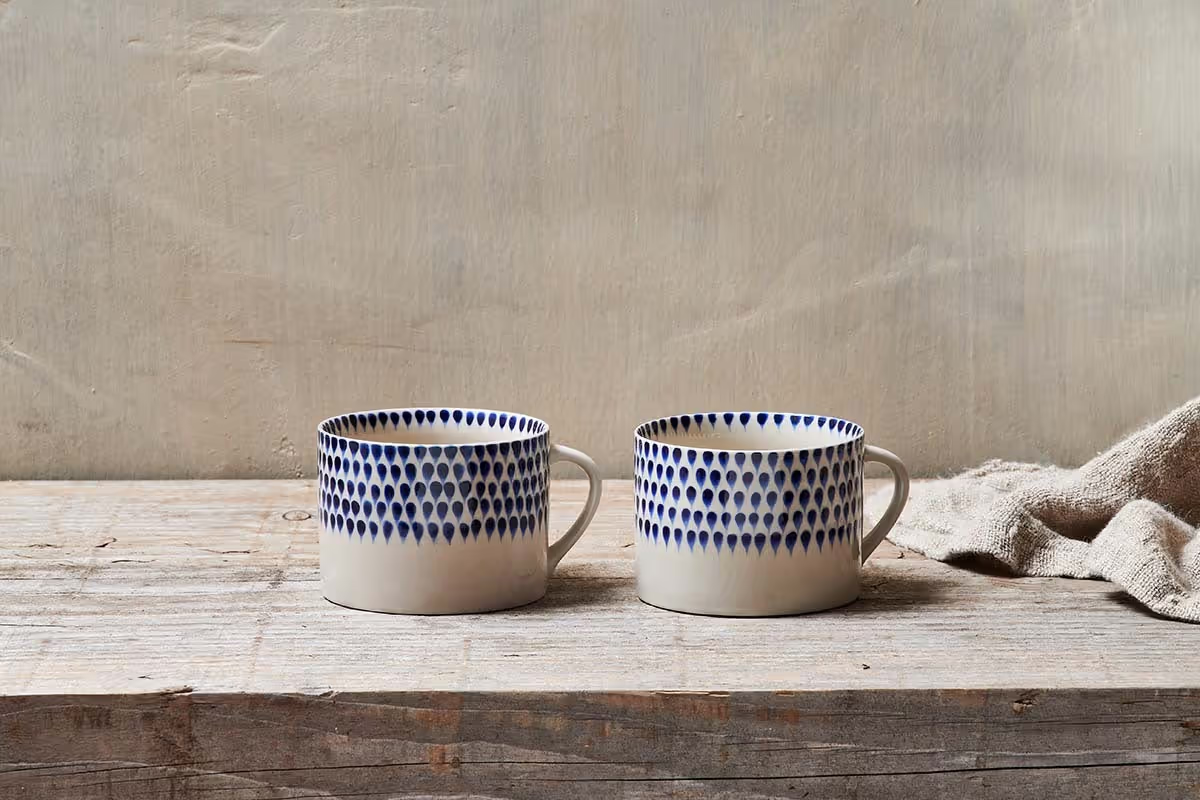
Nkuku produces a wide range of smaller accessories (mirrors, picture frames, candlesticks, vases, plant pots, and lanterns), all made to the same ethical standard as their furniture. These are genuinely good options for gifting or for adding character to a room without a big spend.
Browse Nkuku Home Decor at Earthly Treasures:
Soft Furnishings
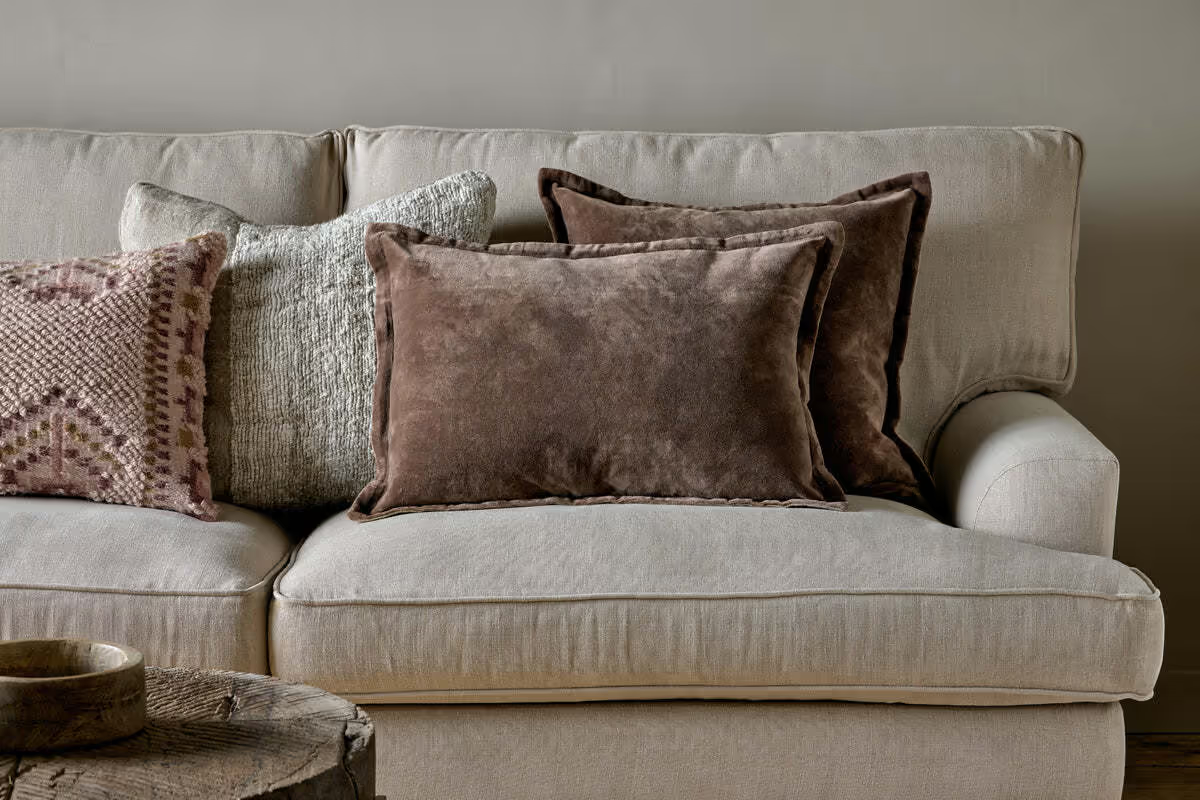
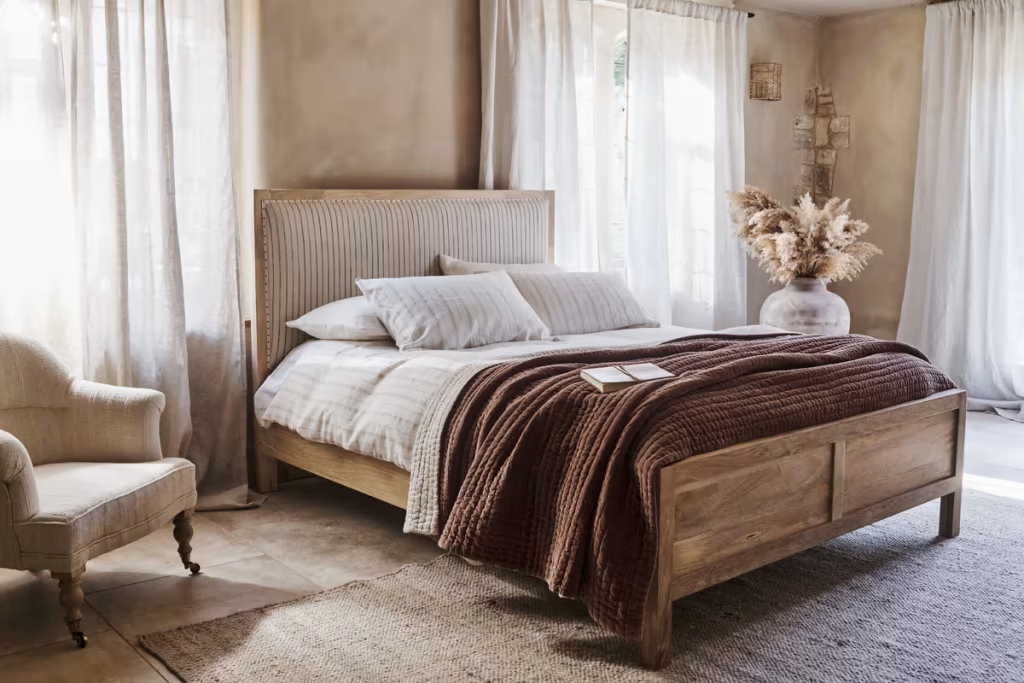
Cushions, throws, and bed linen made from natural fibres, including organic cotton and linen.
Browse Nkuku Soft Furnishings at Earthly Treasures:
Browse Sustainable Throws and Sustainable Cushions at Earthly Treasures.
Quality and Craftsmanship
The handmade nature of Nkuku’s products means there is natural variation between pieces, with slight differences in wood grain, tone, or texture. For most buyers, this is a feature rather than a flaw: it’s proof that a real person made your piece, not a factory line. If you need total uniformity, Nkuku may not be for you. If you value character and individuality, it’s exactly what you’re looking for.
Build quality is consistently reported as solid. Nkuku’s furniture is made using traditional joinery techniques, and the emphasis on longevity (not disposability) shows in the construction. These are not flat-pack pieces.
Price Range
Nkuku sits in the mid-to-premium bracket. Accessories and smaller items start from around £15–£40, while furniture pieces range from approximately £100 for smaller items up to several hundred pounds for larger dining tables or statement pieces. You can often find significant discounts during their seasonal sales.
For what you get (certified ethical production, skilled artisan craftsmanship, durable natural materials), we think the pricing is reasonable. It’s not a budget brand, and it doesn’t pretend to be.
Customer Reviews
Nkuku holds an “Excellent” rating on Trustpilot with thousands of verified reviews. Customers consistently highlight the quality of materials, distinctive design, and careful packaging. Customer service receives strong feedback for being responsive and helpful when issues arise.
The most common complaints relate to occasional delivery delays or courier related issues (which, to be fair, is an issue with third-party logistics rather than Nkuku themselves). Some customers have noted slight colour variation between product photography and the item received, which is worth bearing in mind given the handmade and natural material nature of the range.
Nkuku: Pros and Cons
- Genuinely B Corp certified, independently verified, not just self-declared
- Fairtrade production across the entire supply chain
- Beautiful, distinctive design that holds up over time
- Wide range covering furniture, lighting, accessories, and soft furnishings
- Strong sustainability across materials, packaging, and shipping
- Mid-to-premium pricing, not for very tight budgets
- Natural variation in handmade pieces means no two are identical
- Some delivery issues flagged in reviews, though customer service responds well
- Colour can vary slightly from photography due to natural materials
Our Nkuku Review Verdict: Is It Worth It?
Yes, we think Nkuku is genuinely worth it, as they are one of the most credible ethical home brands operating in the UK market. The B Corp certification and Fairtrade commitment aren’t marketing gloss. They represent a genuine operating model built around fair wages, responsible sourcing, and long-lasting design. The product range is broad enough to furnish a full home, the aesthetic is warm, calming and distinctive, and the quality is built to last rather than landfill. Their products are offered in fairly neutral colours, which can pair well with a range of different interior styles; providing the backdrop for more colourful bold colour palettes, or keeping in style with Scandi and neutral themes, can provide a nice base. The quality of products is high, and most of their range of wooden products can be repaired easily if they get damaged, by sanding back and revarnishing or finishing the item again, contributing to the durability and longevity of the product which makes it a worthwhile investment.
If you’re furnishing or refreshing a room and want to buy once, buy well, and know exactly where your money is going, their pieces belong on your shortlist. We hope this Nkuku review has helped you decide what to purchase and if you have any queries, please drop a comment below and we will get back to you.
Shop Our Favourite Nkuku Picks
We stock a curated selection of Nkuku pieces across our categories. Use the links below to explore some of our favourite Nkuku picks.
£200 And Below Budgets
Mid Range Items
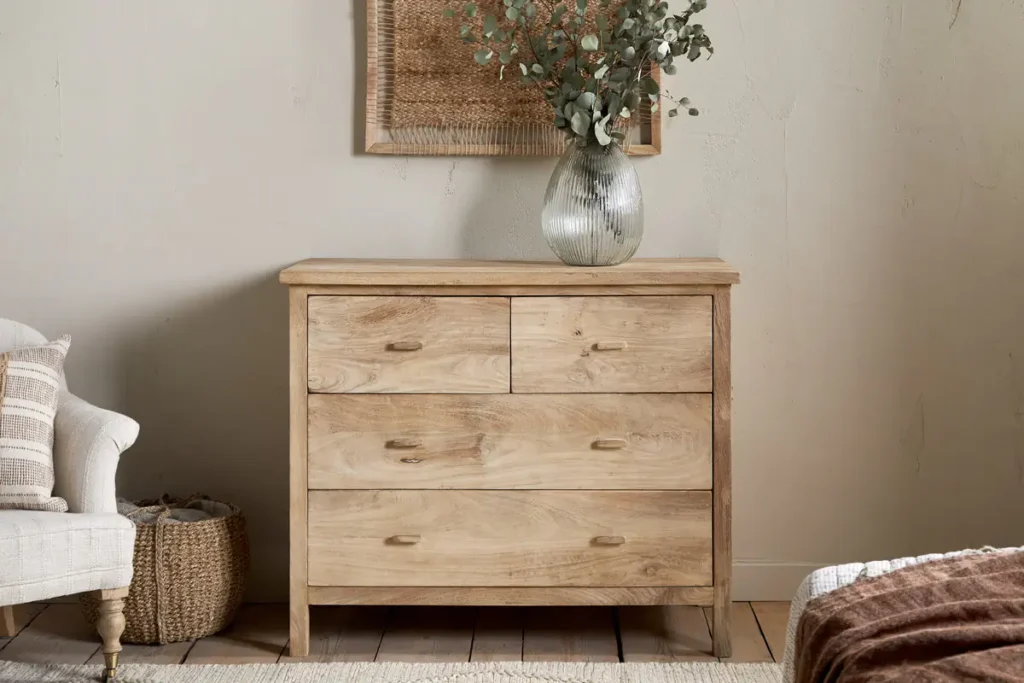
Investment Pieces
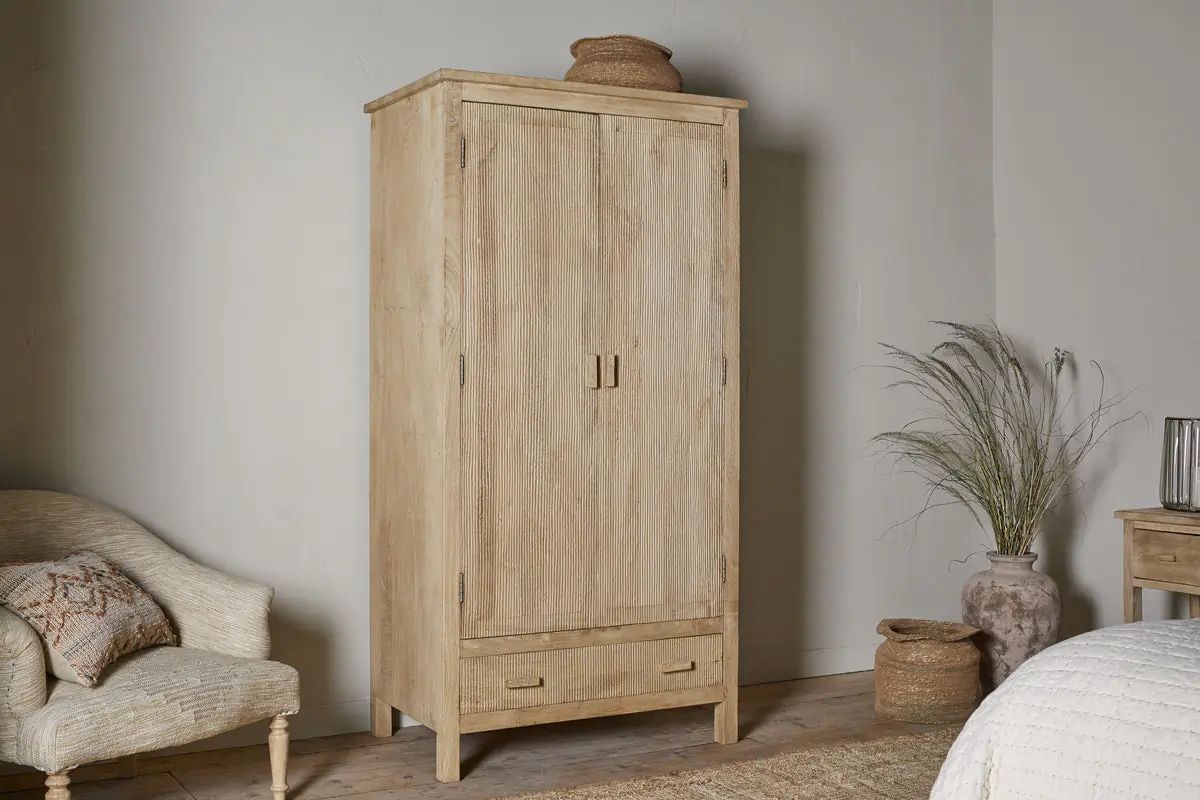
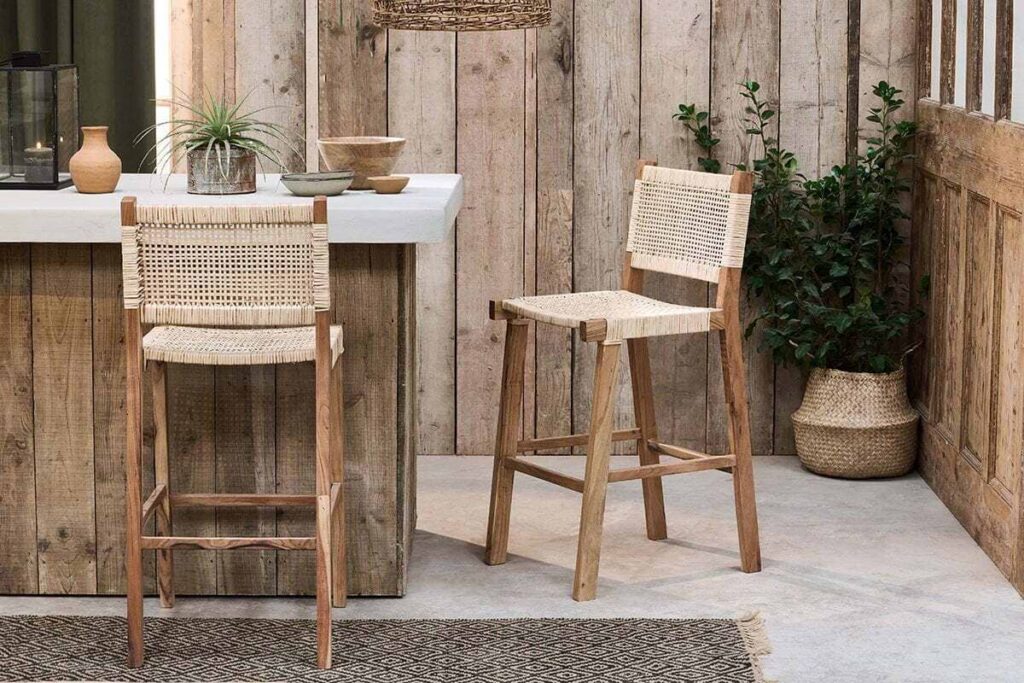
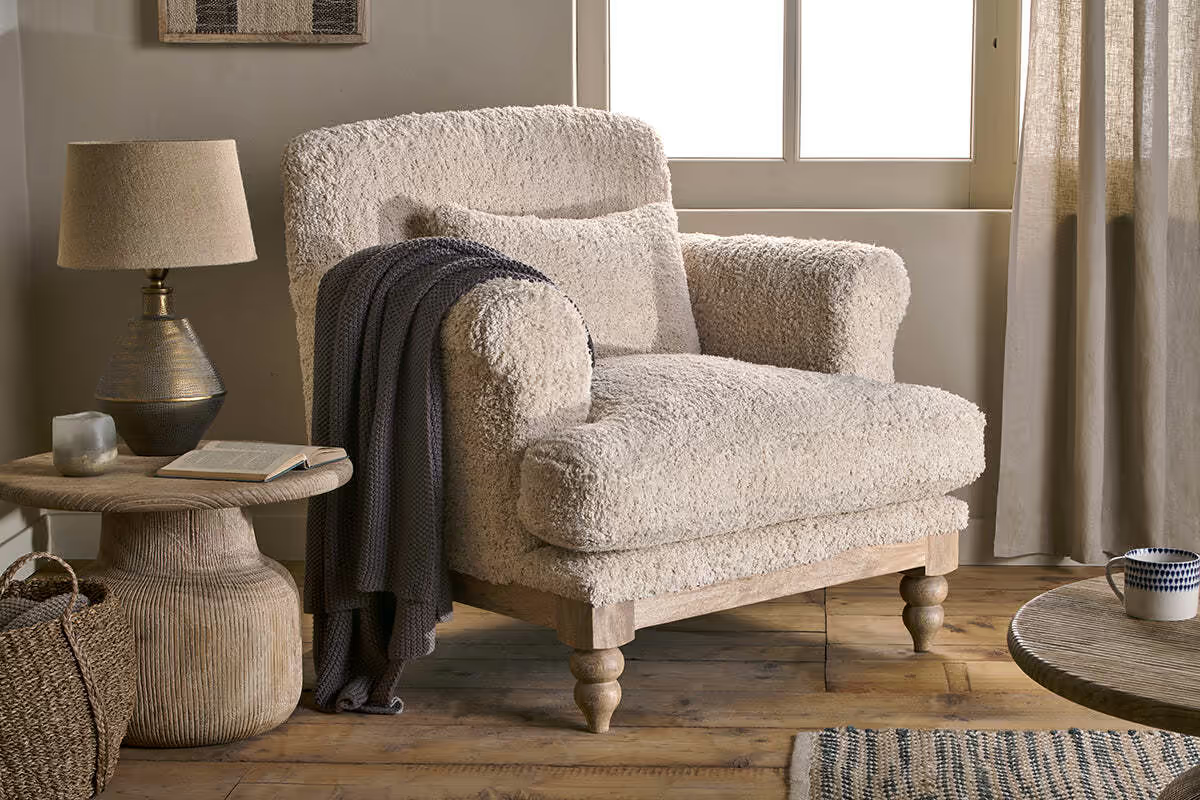


Your article is truly informative. More than that, it’s engaging, compelling and well-written. I would desire to see even more of these types of great writing.
Thank you Brayman, glad you enjoyed the article!