
When browsing through our main hub guide on The Most Sustainable Materials For Home Furnishings, it is easy to focus entirely on the visible choices: finding the right UK artisan, checking for timber certifications, and picking a style that stands the test of time. Yet, there is an invisible element that impacts your home’s ecosystem far more than you might realise: the finish applied to the wood. If you want a genuinely eco-friendly home and healthy indoor air quality, what goes on the timber matters just as much as the tree from which it came. Choosing the right natural wood finish which is non-toxic is the final step in ensuring your sustainable furniture investment is truly safe.
Polyurethane vs. Natural Oils: How Different Wood Finishes Affect Furniture Longevity
To understand how furniture interacts with a British home, we have to look at how different finishes handle moisture and structural movement.
Synthetic Finishes
Synthetic Finishes (Polyurethane, Acrylic) are essentially petroleum-based plastics dissolved in harsh chemical solvents. When applied, the solvents evaporate, causing the plastic molecules to cross-link on top of the wood, creating a brittle, airtight plastic wrap. Because natural timber expands and contracts with changing UK seasons and indoor humidity, this plastic barrier eventually fails. If moisture gets trapped underneath, the wood cannot release it, leading to unsightly cracking, peeling, or internal rot.
Natural Wood Finishes
Natural Oils (Linseed, Tung, Hemp), in stark contrast, are made of tiny, bio-based lipid molecules. Instead of sitting on top as an artificial barrier, they sink deep into the microscopic pores of the timber. Once inside, they undergo polymerisation—a natural reaction where the oil cures and hardens inside the wood fibres, bonding directly with the cellulose. Because it hardens within the pores, the wood remains microporous (breathable). Your furniture can safely absorb and release ambient moisture without ever damaging the finish.
Non-Toxic Plant Based Hardwax Oils: Keeping Indoor Air Pure and Healthy with Zero VOCs
The second reason finishes are a make-or-break choice when buying sustainable furniture comes down to the air you breathe every day.
Traditional Varnishes: To keep plastic polymers remaining liquid in the tin, mass-market manufacturers rely on heavy petrochemical solvents. As the varnish dries, these solvents evaporate into your household air. This process is known as off-gassing. These evaporated chemicals are Volatile Organic Compounds (VOCs). Environmental health studies from the UK Health Security Agency reveal that indoor concentrations of these organic pollutants can build up heavily in modern, well-insulated homes. This chemical off-gassing can cause persistent headaches, respiratory issues, and poor indoor air quality for weeks or even months after unboxing.
100% Plant-Based Oils: Premium natural oils (and high-quality hardwax oils from eco-conscious brands available in the UK, such as Osmo or Auro) use organic, plant-based ingredients and clean waxes like sunflower oil, soy, carnauba, and candelilla wax. Because they do not rely on petrochemical solvents to cure, they have effectively zero VOCs. They harden safely through natural oxygen absorption, meaning the only thing released into your room is a mild, non-toxic, earthy scent.
Editors Choice
If you want absolute control over the air purity in your home, the safest route is to buy beautifully crafted, completely unfinished timber pieces. By selecting furniture that arrives raw, you ensure no hidden synthetic glues or petroleum topcoats enter your household. This makes them the perfect canvas for a pure, zero-VOC natural plant oil:
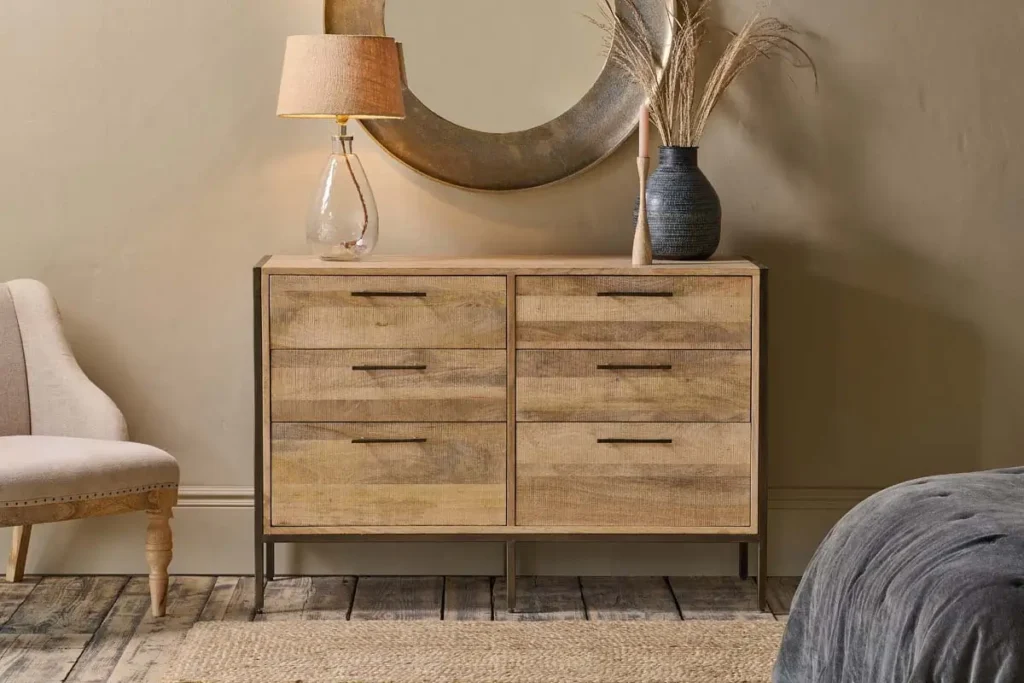
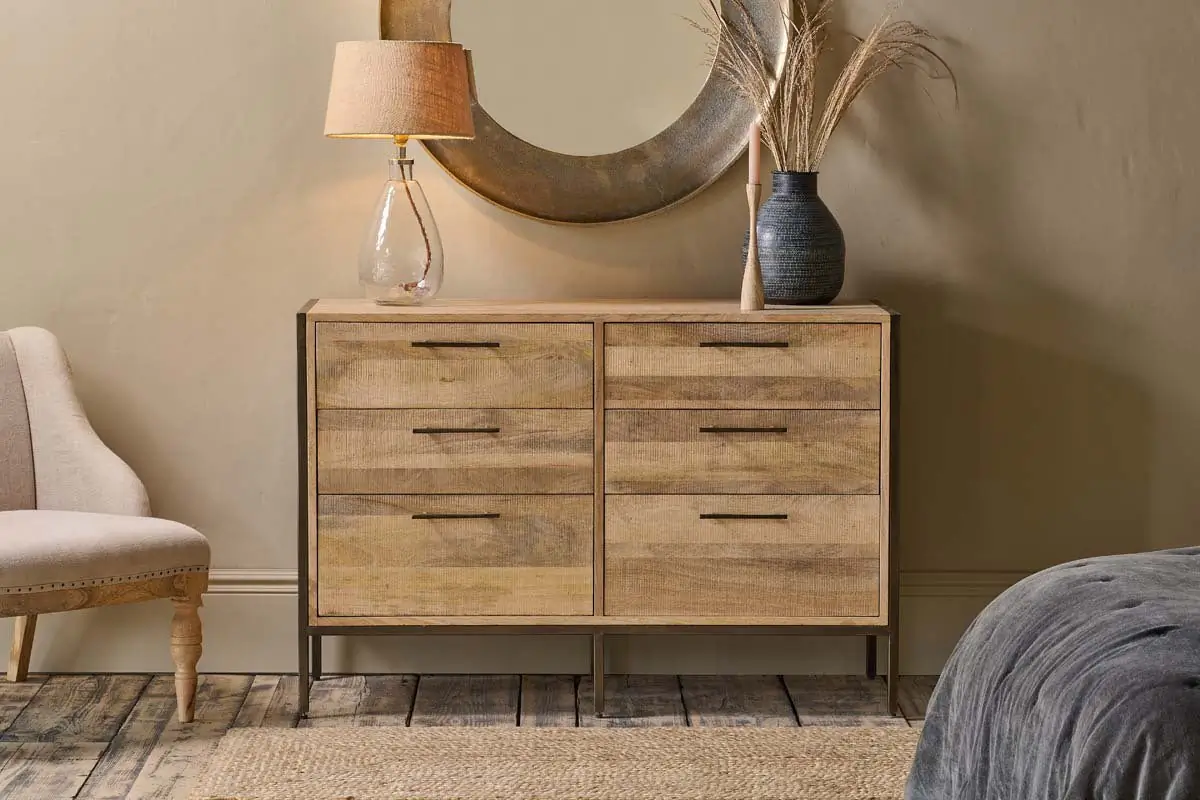
Dasai Mango Wood Chest of Drawers
Bedrooms are where our bodies do the most healing, making zero-VOC air essential. This characterful storage piece is shipped completely untreated, allowing you to finish it with a safe, child-safe natural wood finish to keep your sleep sanctuary pure. We would not recommend to treat it with olive oil as this will make the product sticky, rancid and attract dust over time as olive oil does not harden and cure like other hardwax oils.
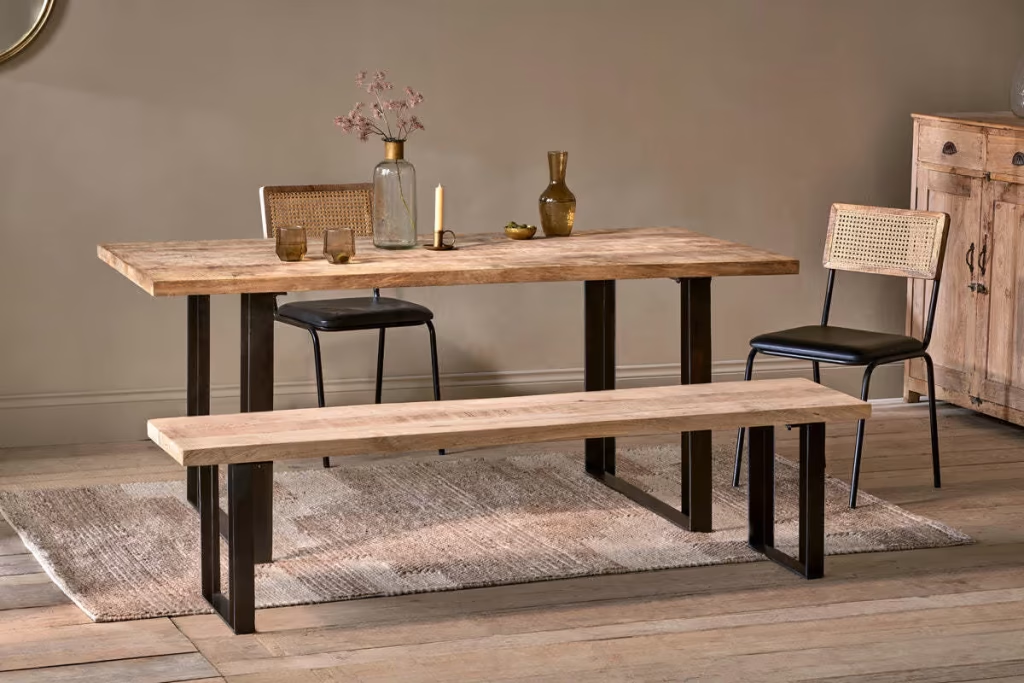
Fia Mango Wood Dining Table
A heavy, stunningly minimalist centerpiece crafted from sustainable mango wood and an industrial iron base. Nkuku treats the Fia table with a factory water-based sealant to help guard against immediate dinner stains and keeps the wood colour to its original raw state in comparison to natural oils. While water-based finishes contain small trace polymers, they drastically reduce VOC off-gassing compared to traditional petroleum lacquers, giving you a functional table that keeps your home’s air cleaner.
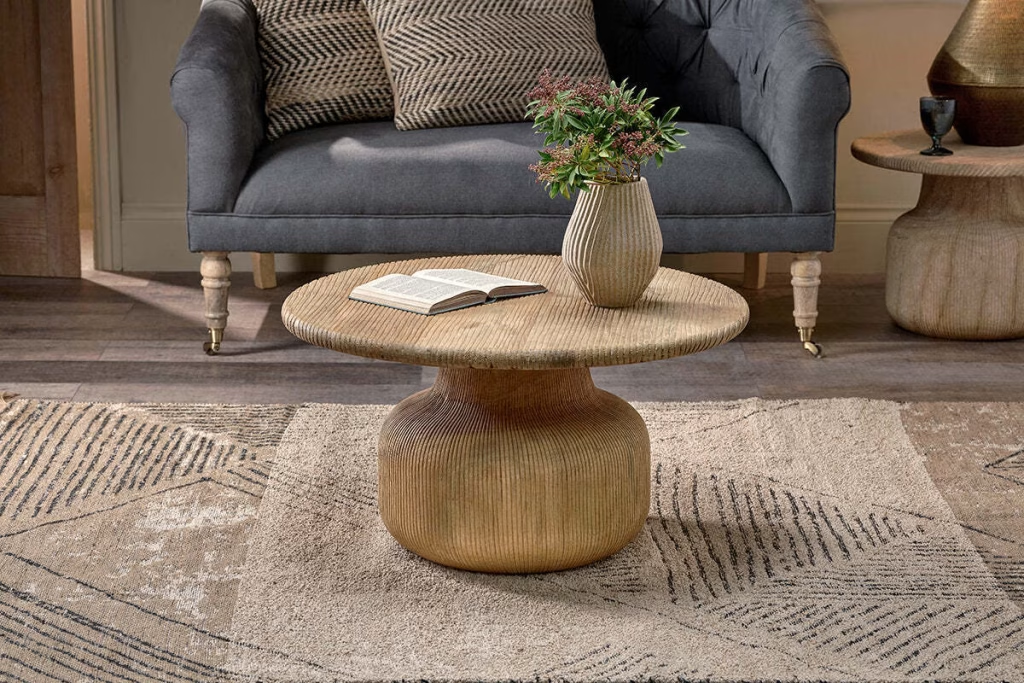
Vivian Grooved Wood Coffee Table
Featuring a gorgeous, highly tactile grooved texture, this solid wood table is built for active living rooms. Because you apply the natural oil finish yourself, any future coffee spills or everyday scratches can be seamlessly spot-repaired in under five minutes. Finishing with raw linseed oil would be a good choice if you are wanting the wood tone to stay as close to the original raw state and not darken too much.
How Do You Spot Safe, Plant-Based Finishes For Eco Friendly Furniture?
When sourcing a non-toxic furniture finish, your choice impacts everything from daily indoor air quality to long-term, sustainable wood maintenance. If your goal is a healthy lifestyle surrounded by beautiful, VOC-free home decor, use this quick checklist when reviewing product specifications:
- Look for Explicit Oil Declarations: Premium, health-conscious makers will proudly list their ingredients. Look for finishes specified as 100% pure linseed, tung, safflower, or hemp oil.
- Check for European Standard EN 71-3: This is the premium safety standard for toy safety. If a dining table or bedside chest coating passes EN 71-3, it is certified entirely safe for human contact and guarantees zero harmful off-gassing.
- Beware of “Fast-Drying” Synthetics: If a product listing boasts a “fast-cure polyurethane topcoat,” it is a synthetic shortcut. While convenient for mass manufacture, it compromises both the breathability of the wood and the purity of your home’s air.
The Longevity Advantage: Why Oiled Eco-Furniture Lasts for Generations
Beyond the immediate health benefits, it is better for a circular economy to choose oil-finished timber. Synthetic plastic coatings are a one-way street. When a polyurethane coating gets deeply scratched or suffers water damage, the entire plastic shell fails and the item can rot if it gets wet. Repairing it requires chemically stripping the entire piece back to bare wood; a frustrating process that often leads to furniture being prematurely discarded.
Natural oil finishes age gracefully. If a surface gets scratched or stained, it doesn’t require a total overhaul. Because the protection lives inside the wood fibres, you can lightly sand the isolated area and apply a fresh dab of oil. Within minutes, the patch blends seamlessly, extending the furniture’s life cycle for generations.
References
UK Health Security Agency (UKHSA), Indoor Air Quality Guidelines for selected Volatile Organic Compounds (VOCs) in the UK, Link: https://assets.publishing.service.gov.uk/media/5d7a2912ed915d522e4164a5/VO__statement_Final_12092019_CS__1_.pdf |
British Standards Institution (BSI), BS EN 71-3:2019+A2:2024 Safety of toys. Migration of certain elements, Link: https://knowledge.bsigroup.com/products/safety-of-toys-migration-of-certain-elements-4 |
UK Health Security Agency Research Portal, IAQ guidelines for selected volatile organic compounds (VOCs) in the UK, Link: https://researchportal.ukhsa.gov.uk/en/publications/iaq-guidelines-for-selected-volatile-organic-compounds-vocs-in-th/
Next – Create Your Healthy Sanctuary
Choosing a non-toxic finish is just one layer of building an eco-friendly home. Now that you know how to protect your indoor air quality:
- Head back to our master hub guide: The Most Sustainable Materials for Home Furnishings: The Ultimate Guide.
OR
- Discover timeless pieces in our Sustainable Bedroom Furniture Directory.